Bathroom Faucet Swivel Aerator Extenders for Renters: What to Check Before You Buy
A renter-focused guide to usable water reach, swivel movement, and the parts of a small bathroom basin your stream can actually reach.
A swivel faucet extender is worth considering when the existing stream lands in the wrong part of a bathroom sink. The real question is not simply whether an attachment can screw onto the faucet. It is whether a movable outlet will put water where your hands need it, keep the stream inside the basin, and clear the backsplash and nearby fixtures as it turns. Start by studying the sink you already use.
Quick answer: buy for usable water reach
Watch where water lands with the faucet in its normal position. Identify the parts of the basin that are difficult to rinse, then imagine the outlet turning toward those areas. Check whether the head could rotate without striking the backsplash, faucet body, mirror, or fixtures. Only after that reach-and-clearance check should you confirm the faucet-end connection.
This guide considers two locked examples, WHEDON SV5C and VEVOR 63014, by their movement and everyday-use roles. It does not compare flow-rate figures, promise water savings, or rank one product as universally better.
1. What problem does a swivel extender actually solve?
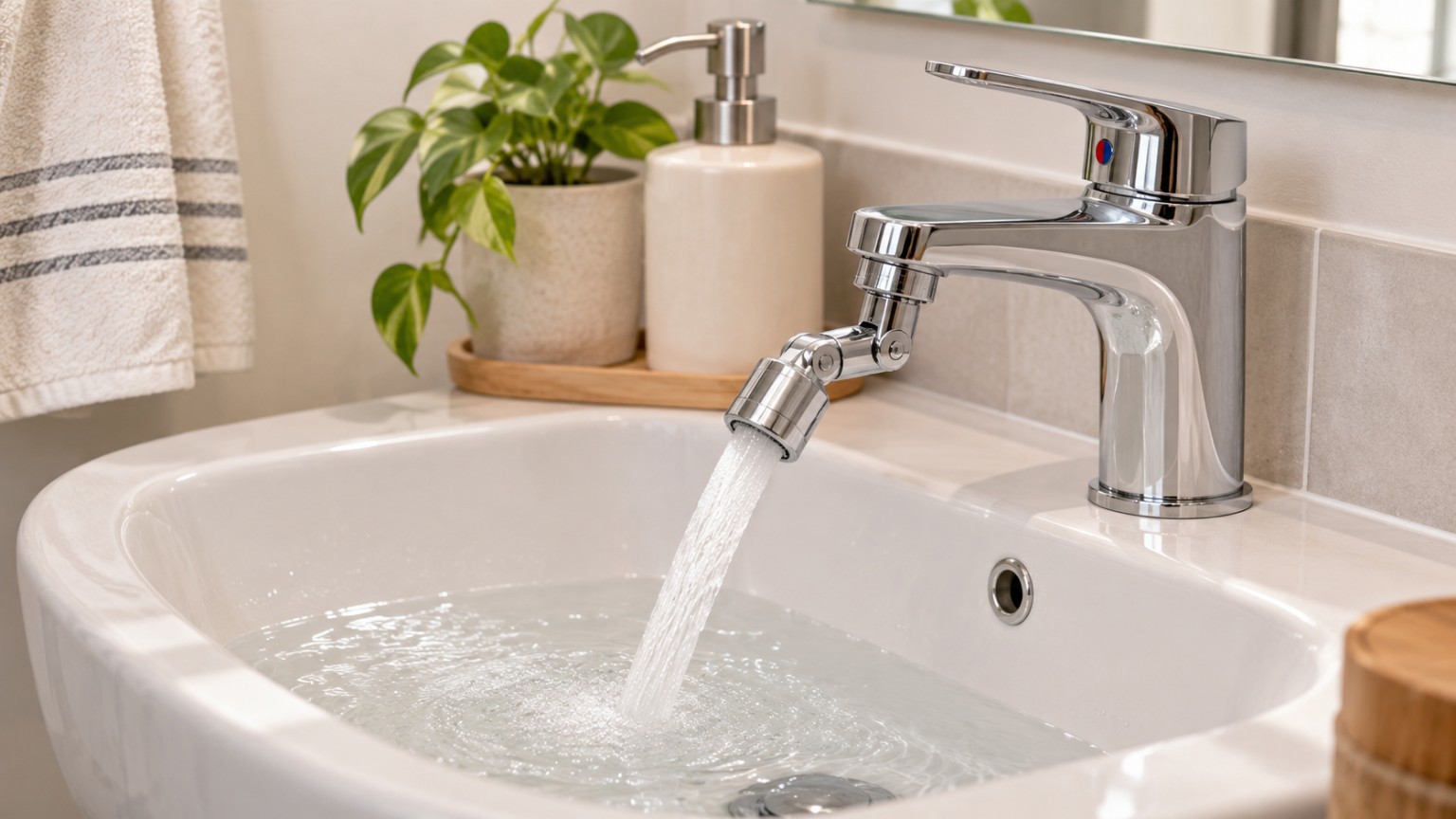
A fixed bathroom faucet sends water along one path. If that path lands too close to the back wall, too far from your hands, or in an inconvenient part of a small basin, changing the direction of the outlet may make washing and rinsing easier. A swivel head changes where the stream can be aimed; it does not make the sink deeper, wider, or inherently more suitable for every task.
Think about a real routine: rinsing soap from your hands, bringing water closer for face washing, or directing water toward an awkward section of the basin during cleanup. If the existing stream already reaches those areas comfortably, an extender may add bulk without adding useful function.
2. Map the water reach zone you have today
Run the existing faucet at a normal setting and observe where the stream hits the basin. Note the landing point relative to the drain, the front and rear walls, and the area where you naturally place your hands. Notice whether the stream is too far back or too close to the rim for comfortable use.
Next, identify the additional landing areas that would actually help. A useful extender should let you aim toward those areas while keeping water inside the basin. The goal is a better working zone, not the largest-looking swivel range in a product photograph.
3. Check the swivel movement envelope
Imagine the attachment moving through its practical arc below the spout. Look behind the faucet for backsplash clearance, beside it for handles or other fixtures, and above or around it for shelves, mirror edges, and the faucet body itself. An outlet may be movable in isolation but restricted once installed in a tight bathroom.
Check both the attachment’s physical path and the water stream’s path. A position that clears the backsplash may still send water toward the basin edge. A longer reach may bring water nearer to your hands while reducing room beneath the spout. Favor positions you could use repeatedly without splashing beyond the sink.
4. Test basin geometry against daily rinsing
Handwashing
When washing hands, ask whether a redirected stream would meet your hands in a comfortable location. The benefit comes from reaching the working area without leaning, twisting your wrists, or holding the swivel head in an awkward position.
Face washing and rinsing
For face washing, consider both the landing point and the room between the spout and the basin. A shallow sink or low faucet may remain cramped even when the outlet can pivot. A new angle is helpful only when it leaves enough room for the task.
Cleaning the basin
For basin cleaning, identify the sections that currently require moving water by hand or using a cup. A swivel outlet might direct water toward some of them, but the basin walls, faucet position, and available rotation determine what can actually be reached. Do not assume complete coverage.
5. Compare two movement and control approaches
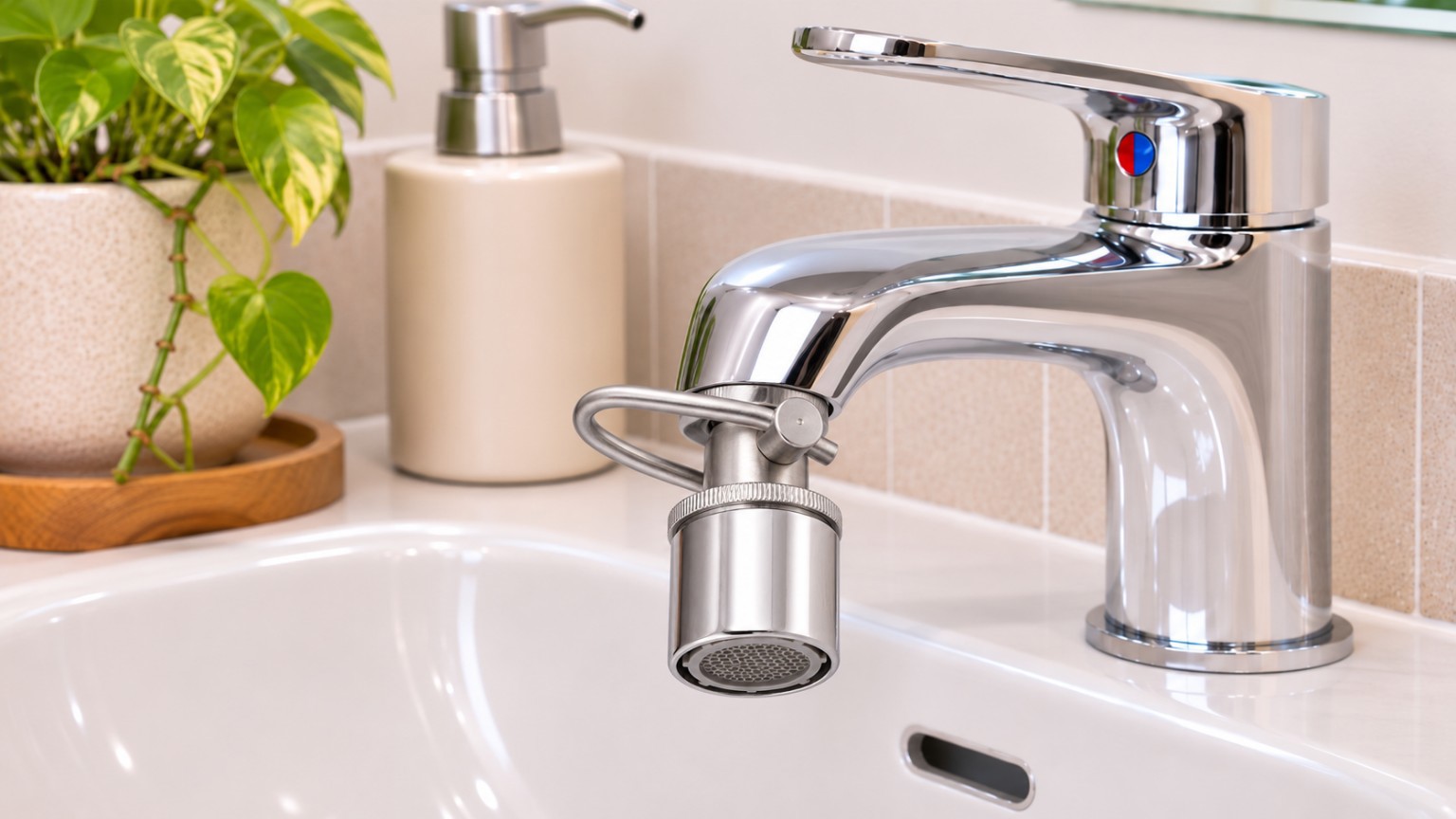
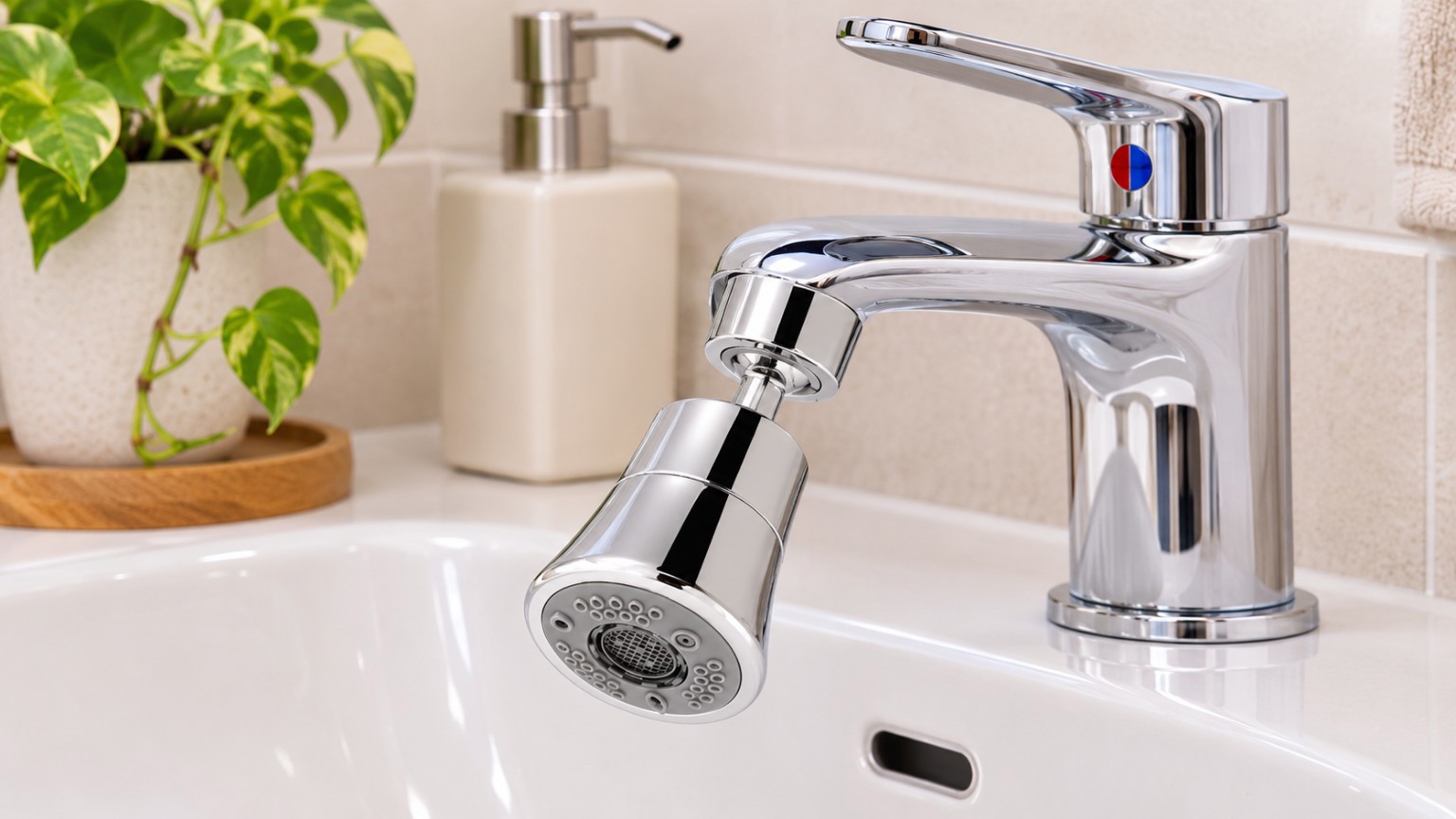
WHEDON SV5C (R1) is the locked swivel-aerator example with lever control: evaluate whether the control is easy to reach and whether its swivel path aims the stream toward your useful basin zone. VEVOR 63014 (R2) is the locked swivel/extender example: evaluate the practical change in outlet reach and whether its movement clears the backsplash and basin. Neither is a universal winner; compare the intended movement and control experience against your sink.
6. What to measure and observe before buying
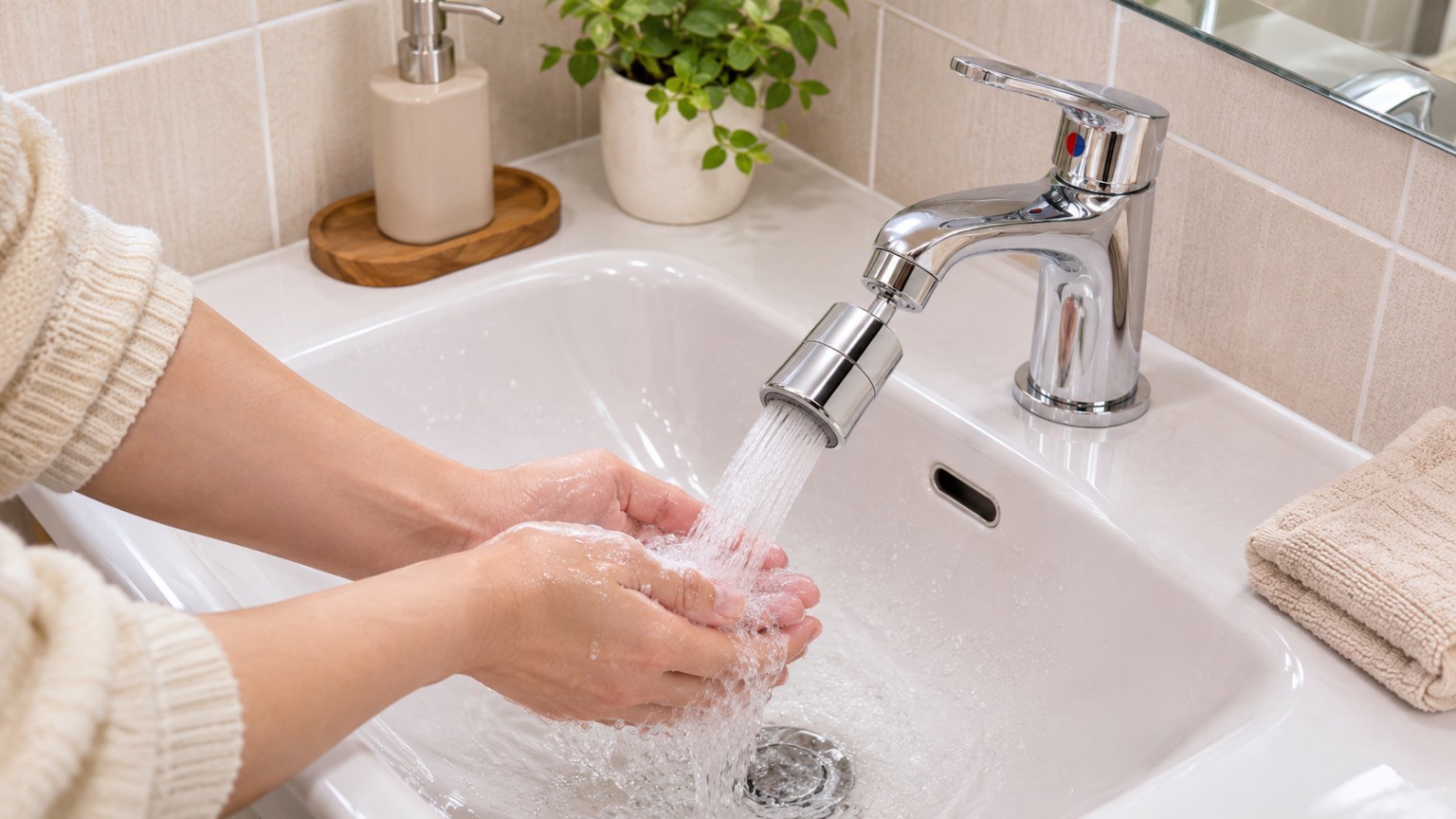
Current water landing point: note where the existing stream reaches the basin.
Desired reach zone: identify the handwashing or rinsing area you want water to reach.
Spout-to-backsplash space: check the room available for the swivel head to turn.
Basin edge and depth: consider whether redirected water would stay inside the sink.
Nearby obstacles: look for faucet handles, mirror edges, shelves, and other fixtures.
Everyday access: make sure you could reach the head or lever while using the sink.
Faucet outlet as a final fit check: identify the removable tip and verify the specific product connection before purchase.
7. Confirm the faucet connection as a supporting check
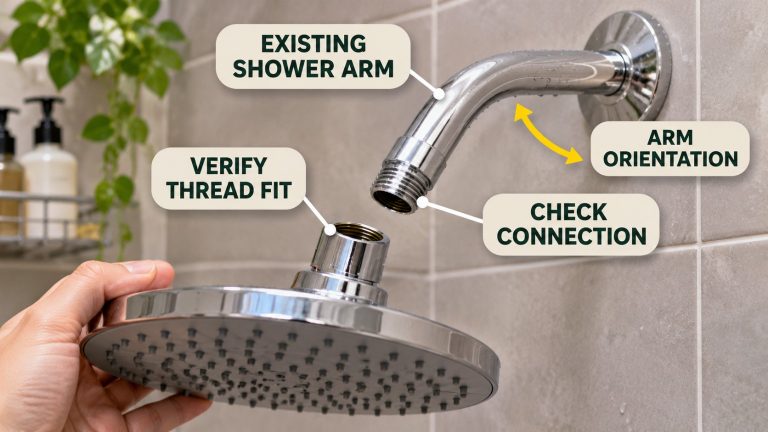
Once a product appears useful for the basin’s reach and movement, check the actual faucet-end interface. Identify whether the existing tip is removable and compare the outlet with the specific product instructions and any documented adapter requirements. Do not assume that either option fits every faucet or thread type.
For a rental, favor an installation and removal approach that does not damage the existing fixture. Follow the product instructions, retain the original faucet component where appropriate, and check for leaks and splash after installation. These checks matter, but they should not replace the earlier decision about usable reach.
8. When a swivel extender will not help
Skip this category if the current stream already reaches your working area, the basin is too shallow to contain a redirected stream, the faucet is too close to the backsplash for useful movement, or the added head would interfere with your hands or nearby fixtures. Also skip it when the faucet connection cannot be confirmed safely compatible.
An extender does not fix a badly positioned basin, create extra counter space, or solve a water-quality concern. It is a water-direction and reach accessory, not a filter or purification device.
9. Make the purchase decision in the right order
First identify the reach problem in your daily routine. Second map where water currently lands and where you want it to land. Third check the swivel movement envelope and basin geometry. Fourth compare the WHEDON control approach with the VEVOR extender approach. Finally, verify the exact faucet-end fit and removability before ordering.
Bottom line
Buy for usable water reach, not merely attachment fit. A swivel extender earns its place at a small bathroom sink only when the head can move freely, the stream reaches a more useful part of the basin, and the new position works for ordinary washing and rinsing. Confirm the specific faucet connection last; compatibility alone does not make an accessory useful.
| WHEDON SV5C (R1) | VEVOR 63014 (R2) | Primary use lens |
|---|---|---|
| Swivel head with lever control | Swivel / extender reach | Reach-zone check |
| Can the head aim water where your hands work? | Does the extended outlet improve the useful landing zone? | Movement clearance |
| Can the head and lever move near the faucet body? | Can the extender move without striking backsplash or basin? | Daily-use check |
| Is the lever accessible while washing? | Is the redirected stream practical for rinsing? | Final supporting check |
| Verify exact faucet-end fit and removal | Verify exact interface / adapter fit and removal |