Small Closet Organizers for Renters: A Fit-First Guide to Hanging Space, Shelf Depth, and Drawer Fit
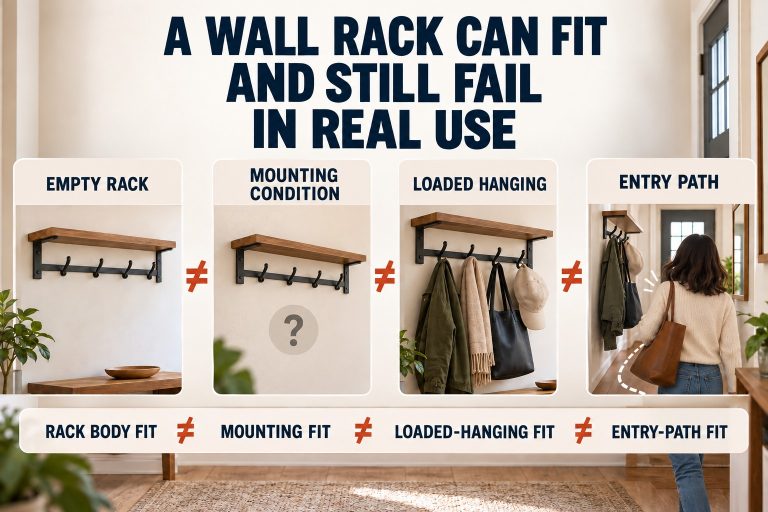
A closet organizer can fit the width of your closet and still be a poor fit in real use.
A hanging organizer may extend so far downward that it collides with clothes or floor storage. A drawer unit may fit under a rod but still be hard to use if there is not enough room to pull the drawers open. An under-shelf basket may look compact but only work with a specific shelf thickness.
That is why the first question should not be “Which organizer holds the most?”
It should be:
Where can this organizer actually fit, install, and open inside my closet?
This guide uses a Fit-First approach for small closets in rentals: measure the usable space, map the closet into functional zones, choose the right organizer role, then compare products by verified dimensions and installation requirements.
Measure the Closet Before You Shop
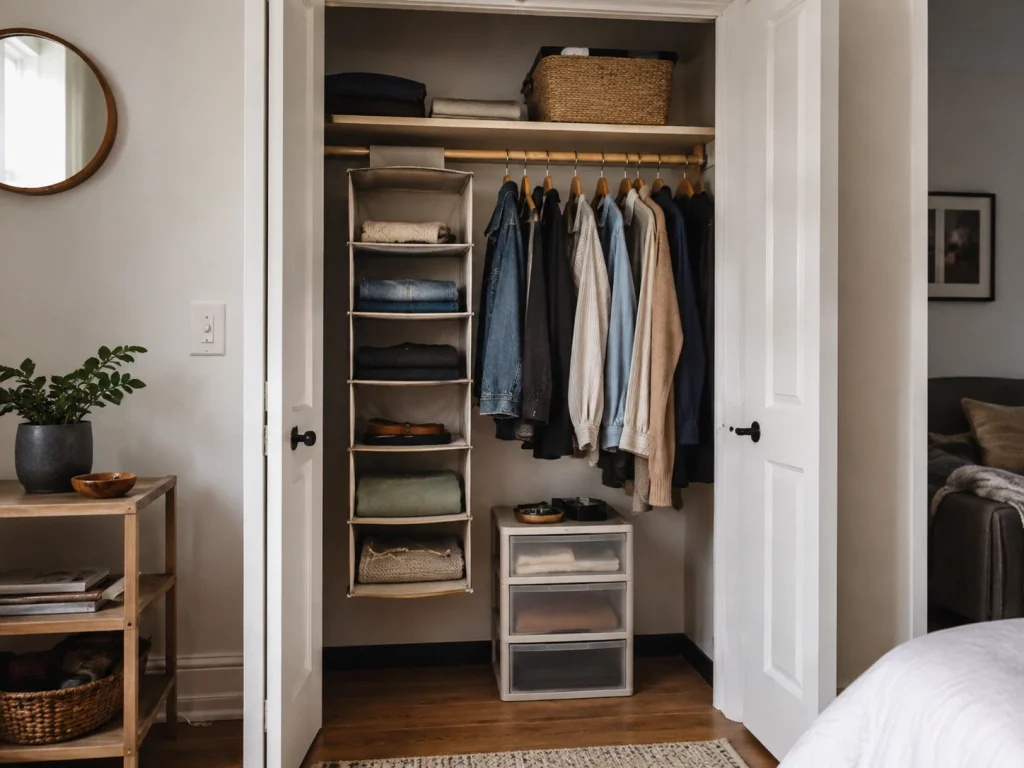
Start with the installation boundary, then measure the space the organizer will actually use.
1. Check the installation boundary first
Before dimensions, identify what the organizer depends on.
Ask:
- Does it hang from an existing closet rod?
- Does it clip to a shelf?
- Does it stand on the floor?
- Does it require assembly?
- Does the product page recommend or require wall anchoring?
- Does it depend on a particular shelf thickness or closet-system geometry?
For renters, this matters because two organizers with similar dimensions can create very different installation requirements.
A product described as freestanding is not automatically appropriate for every rental, and a no-drill product should not automatically be treated as damage-free. Those are separate claims.
2. Measure usable width
Do not stop at the wall-to-wall width.
Check the span that is actually usable after accounting for:
- doors and trim,
- existing shelving,
- rods,
- hanging clothes,
- baseboards,
- neighboring storage.
3. Measure usable depth
Depth affects more than whether an organizer can physically sit inside the closet.
Check whether its depth could interfere with:
- the closet door,
- hanging garments,
- access to another organizer,
- the path needed to reach drawers or bins.
4. Measure hanging drop
For a hanging organizer, measure from the rod down to the point where another item begins.
That may be:
- the closet floor,
- a drawer unit,
- a shoe rack,
- or the bottom of hanging garments.
This is especially important for long organizers. A unit that uses a large vertical drop can remove space that looked available on paper.
5. Measure drawer and bin access
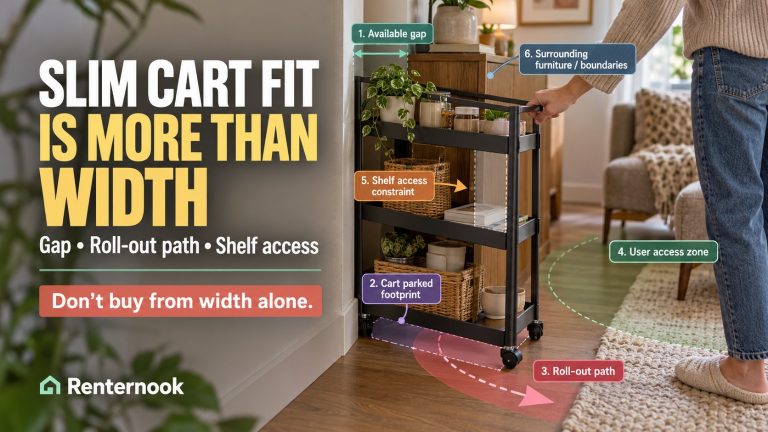
For front-access storage, the footprint is only part of the fit.
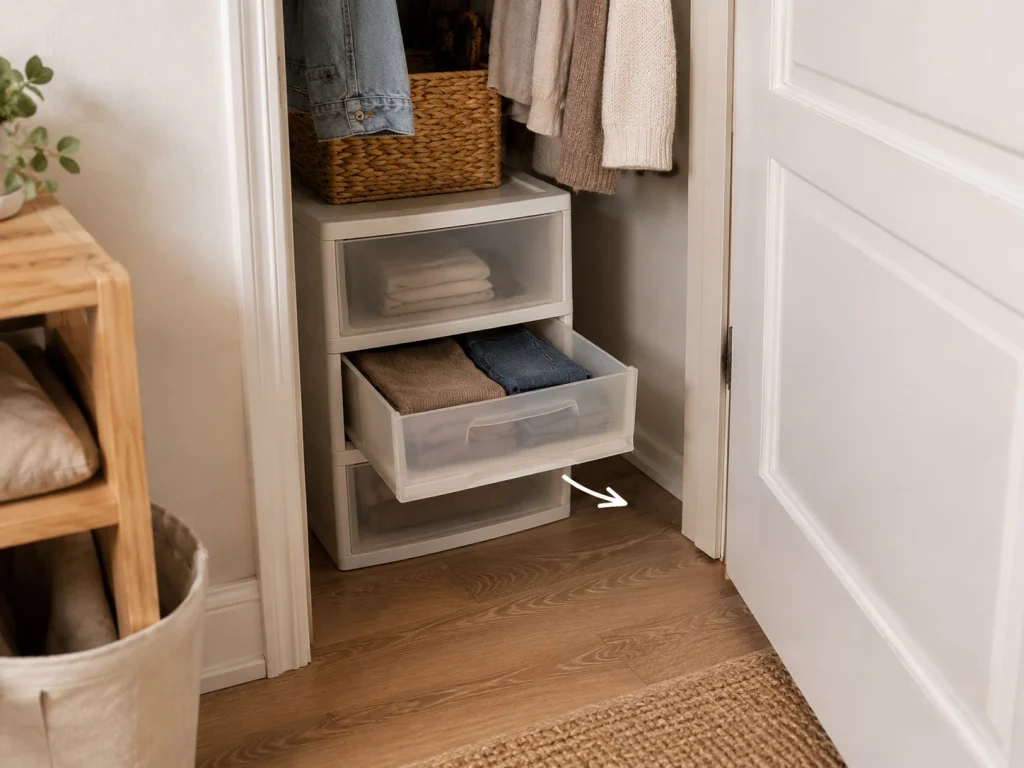
Also check:
- which direction the drawer opens,
- whether the closet doorway gives you enough access,
- whether hanging clothes fall in front of it,
- whether nearby furniture or doors block the pull-out path.
There is no universal drawer-clearance number that works for every closet. The safe approach is to compare the organizer’s actual dimensions and opening direction against your own space.
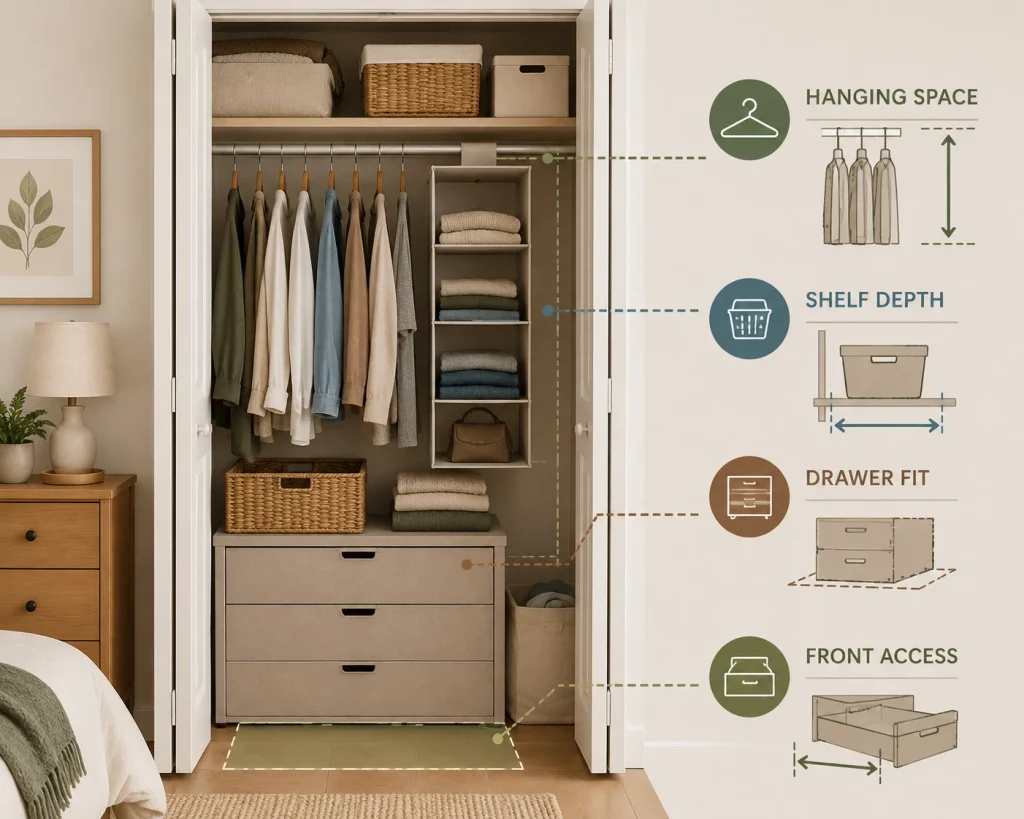
Map Your Closet Into Usable Zones
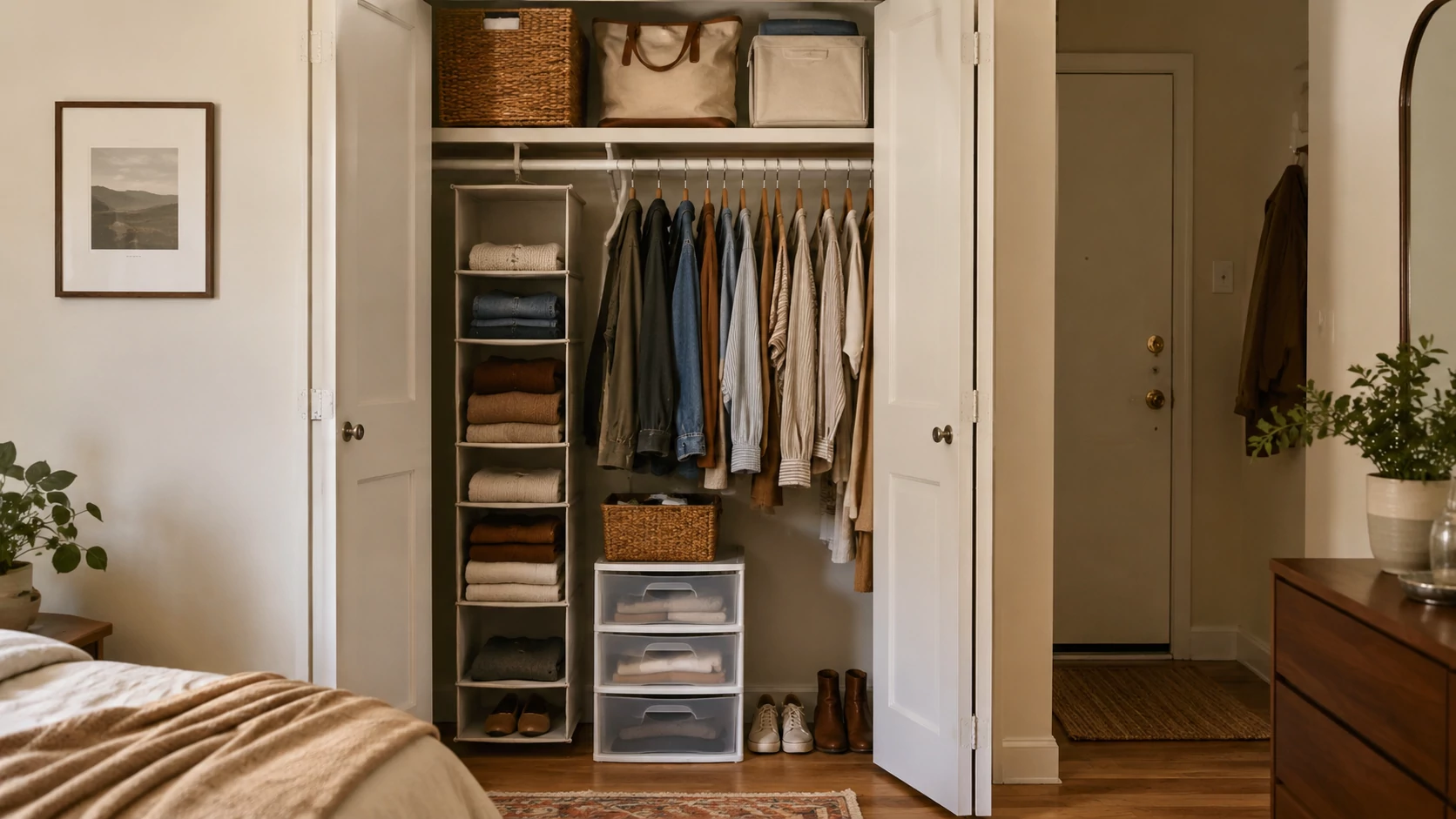
You do not need to redesign the closet. This is simply a way to see where storage can realistically go.
The zone model is a measurement aid, not a rule that every closet needs storage in every zone.
Unused vertical space, for example, is not automatically usable. Stackability, stability, access, and installation limits still depend on the specific product.
Choose the Organizer Role Before the Product
The seven products in this guide fall into four different roles. Comparing them only by price or capacity would mix products that solve different problems.
Hanging organizer
A hanging organizer converts part of the rod zone into shelves.
Check:
- how much rod width it uses,
- its full vertical drop,
- its depth,
- whether it competes with hanging garments or floor storage.
Stackable drawer unit
A stackable drawer adds enclosed, front-access storage on a shelf or floor.
Check:
- footprint,
- drawer-opening path,
- stacked height,
- whether stackability is explicitly supported by the manufacturer.
Shelf or under-shelf organizer
This role uses an existing shelf rather than floor or rod space.
Check:
- shelf thickness,
- shelf depth,
- free space below the shelf,
- the product’s load limit when one is published.
Freestanding or modular floor organizer
These products use the floor zone without depending on a closet rod or shelf.
Check:
- width and depth,
- assembly requirements,
- hanging-clothes clearance above,
- whether stacking is explicitly supported.
What We Checked
Renternook did not physically test these products.
For this guide, we checked current manufacturer or major-retailer information for fit-related details such as:
- external dimensions,
- installation or mounting type,
- rod, shelf, floor, or hardware dependency,
- stackability when explicitly stated,
- published load information when it matters,
- product-specific compatibility limits,
- current product-page availability context.
We do not treat retailer marketing language as proof that a product is universally easy to install, renter-safe, damage-free, durable, or suitable for most closets.
Compare Small Closet Organizers by Fit Role
The table is intentionally placed after the measurement framework. The goal is to rule out poor-fit product roles before comparing individual products.
Hanging Organizers
IKEA SKUBB Organizer with 6 Compartments
Role: Hanging organizer
Source-listed dimensions: 13¾”W × 17¾”D × 49¼”H
Installation: Hangs inside a wardrobe or on a freestanding rack using a hook-and-loop fastener.
Pros
- Does not depend on wall mounting based on the current IKEA product information.
- Provides six vertical compartments.
- Uses 13¾ inches of width.
Cons / fit costs
- Extends 49¼ inches downward from its mounting point.
- Uses 17¾ inches of depth.
- Occupies rod space that might otherwise be used for hanging garments.
Fit-First takeaway
Measure both the rod width and the full hanging drop.
This option is more relevant when you have enough vertical space below the rod for folded-item storage. Reconsider it if long garments or a floor organizer already occupy that same vertical column.
Source: IKEA — SKUBB Organizer with 6 compartments, Article 403.000.49
https://www.ikea.com/us/en/p/skubb-organizer-with-6-compartments-white-40300049/
Brightroom Hanging Closet 6 Shelf
Role: Hanging organizer
Source-listed dimensions: Target lists 12″L × 52″H × 12″W
Installation: Two hooks attach to a closet rod; Target lists no assembly required.
Pros
- Six open shelves.
- No assembly required according to Target.
- Source-listed width and length are both 12 inches.
Cons / fit costs
- Extends 52 inches vertically.
- Uses rod space.
- Target lists a 12-pound product-level load; that should not be divided into an assumed per-shelf rating.
Fit-First takeaway
The 52-inch drop is the first number to check.
A low rod or long hanging garments can make this role difficult to combine with floor-level storage.
Source: Target — Brightroom Hanging Closet 6 Shelf, TCIN 94939032
https://www.target.com/p/-/A-94939032
Stackable Drawer Units
IRIS USA Compact Stacking Drawer — 47 Quart
Role: Stackable drawer
Source-listed dimensions: 19.1″L × 20.7″W × 10.3″H
Installation: Freestanding; IRIS explicitly describes the units as designed to stack securely.
Pros
- Manufacturer-supported stackability.
- Manufacturer lists clothes and closet storage as use cases.
- Front-access drawer format.
Cons / fit costs
- Requires a relatively large floor or shelf footprint.
- Needs usable space in front of the drawer.
- The manufacturer page used for this guide does not establish a universal maximum stack count.
Fit-First takeaway
This is the larger drawer role in the shortlist.
Check the 19.1-inch length, 20.7-inch width, and the drawer-access path against the actual closet opening before thinking about stacking.
Source: IRIS USA — Compact Stacking Plastic Drawer Unit 47 Quart, SKU 510008
https://www.irisusainc.com/products/compact-stacking-stackable-plastic-drawer-unit-47-quart-white-2-count
IRIS USA 6 Quart Compact Stacking Drawer
Role: Small stackable drawer
Source-listed dimensions: 13.1″L × 8.5″W × 5.4″H
Installation: Freestanding; grooves in the lids are designed to secure units when stacked.
Pros
- Much narrower than the 47-quart drawer.
- Manufacturer-supported stacking design.
- Useful as a small-item or accessory-storage role.
Cons / fit costs
- This is a small-item drawer, not the same storage role as a full clothing drawer.
- Still requires front-access space.
- Manufacturer stackability should not be converted into an unlimited stacking claim.
Fit-First takeaway
This makes more sense when the problem is storing accessories or small categories in a narrow zone.
It is not a substitute for a larger drawer when the goal is folded-clothing storage.
Source: IRIS USA — 6 Quart Compact Stacking Drawer 4 Pack, SKU 587655
https://www.irisusainc.com/products/6-quart-compact-stacking-drawer-4-pack-black
Shelf / Under-Shelf Organizer
IKEA PÅLYCKE Clip-on Basket
Role: Under-shelf organizer
Source-listed dimensions: 14¼”L × 10¼”W × 5½”H
Published shelf compatibility: 5/8–3/4″ thick
Published max load: 4 lb
Installation: Clips under a compatible shelf; IKEA states that drilling is not required.
Pros
- Uses the volume below an existing shelf.
- No-drill installation is explicitly stated by IKEA.
- The published shelf-thickness range gives you a clear compatibility check before buying.
Cons / fit costs
- Shelf thickness must fall within the published 5/8–3/4″ range unless separately verified.
- Uses space below the shelf that may already be needed for folded items or hanging clothes.
- Published maximum load is 4 lb.
Fit-First takeaway
This is a good example of why installation belongs before capacity.
If the shelf itself is incompatible, the basket’s dimensions and storage function do not matter.
“No drilling” is source-supported for this product. That does not automatically mean “damage-free” or “renter-safe” in every closet.
Source: IKEA — PÅLYCKE Clip-on basket, Article 005.344.32
https://www.ikea.com/us/en/p/palycke-clip-on-basket-00534432/
Freestanding / Modular Floor Organizers
Brightroom 31″ Stackable Shelf
Role: Freestanding / modular floor organizer
Source-listed dimensions: 11.6″H × 30.8″W × 11.6″D
Installation: Ground freestanding; adult assembly required; Target says tools are not provided.
Stackability: Explicitly described as stackable.
Published load: Target lists 15 lb at product level.
Pros
- Does not depend on a closet rod or shelf.
- Uses open shelving.
- Stackability is explicitly stated.
Cons / fit costs
- Needs 30.8 inches of floor width.
- Requires assembly.
- The cited product information does not establish a universal safe stack count.
Fit-First takeaway
Measure the floor width first, then check what hangs above it.
A shelf can fit the closet floor and still conflict with shirts, dresses, or another organizer sharing the same vertical space.
Source: Target — Brightroom 31″ Stackable Shelf, TCIN 93155017
https://www.target.com/p/-/A-93155017
Brightroom 2-Tier Stackable Bamboo Shoe Rack
Role: Freestanding / modular floor organizer
Source-listed dimensions: 13.5″H × 25″W × 12″D
Installation: Ground freestanding; adult assembly required; Target says tools are not provided.
Stackability: Explicitly described as stackable.
Published shelf capacity: 6 lb maximum per shelf.
Pros
- Uses less floor width than the 31-inch Brightroom shelf.
- Freestanding.
- Product-specific stackability is stated by Target.
Cons / fit costs
- Still requires 25 inches of width and 12 inches of depth.
- Requires assembly.
- The cited source does not establish a universal safe stack count or stacked-stability claim.
Fit-First takeaway
This role is most relevant when shoe storage is the main floor-zone problem.
Check whether hanging clothes, drawers, or other floor storage already need the same 25-inch-wide area.
Source: Target — Brightroom 2 Tier Stackable Bamboo Shoe Rack, TCIN 93145379
https://www.target.com/p/-/A-93145379
How to Buy a Small Closet Organizer
Use this order instead of starting with price.
1. Installation
Ask what the product needs:
- rod,
- shelf,
- floor,
- hardware,
- wall anchoring,
- assembly.
If the installation method does not work for your closet or rental situation, stop there.
2. Physical fit
Compare the product’s published dimensions against the actual usable zone.
Check width, depth, height, and any product-specific compatibility requirement.
3. Access
Can you actually use it after installation?
Check:
- drawer-opening path,
- hanging-clothes interference,
- reach,
- door and closet-opening conflicts.
4. Organizer role
Make sure the product solves the right problem.
A small accessory drawer and a 47-quart clothing drawer are both stackable drawers, but they are not substitutes for the same storage job.
5. Capacity and organization function
Only compare capacity after fit, installation, and access pass.
A larger organizer is not more useful if it blocks the closet or cannot be opened comfortably.
6. Budget
Now compare price among the products that already fit the role and space.
This keeps a low price from pushing a poor-fit product back onto the shortlist.
Common Fit Mistakes to Avoid
Measuring width but not depth
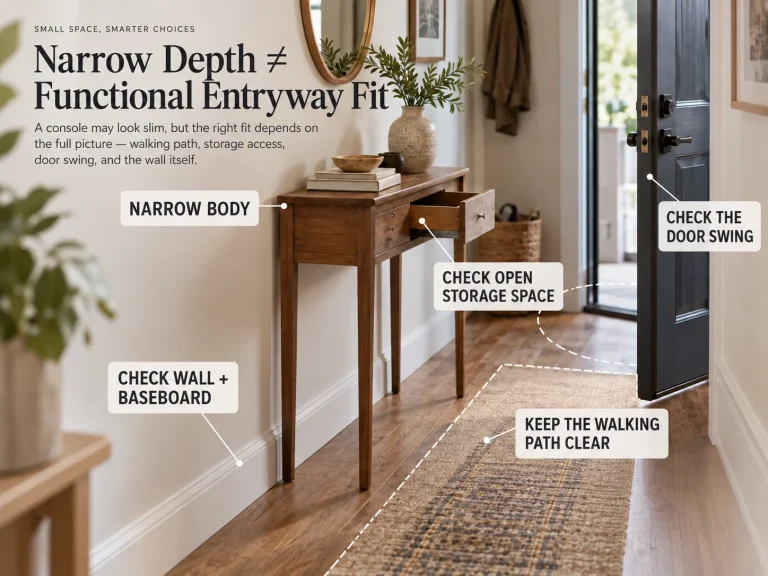
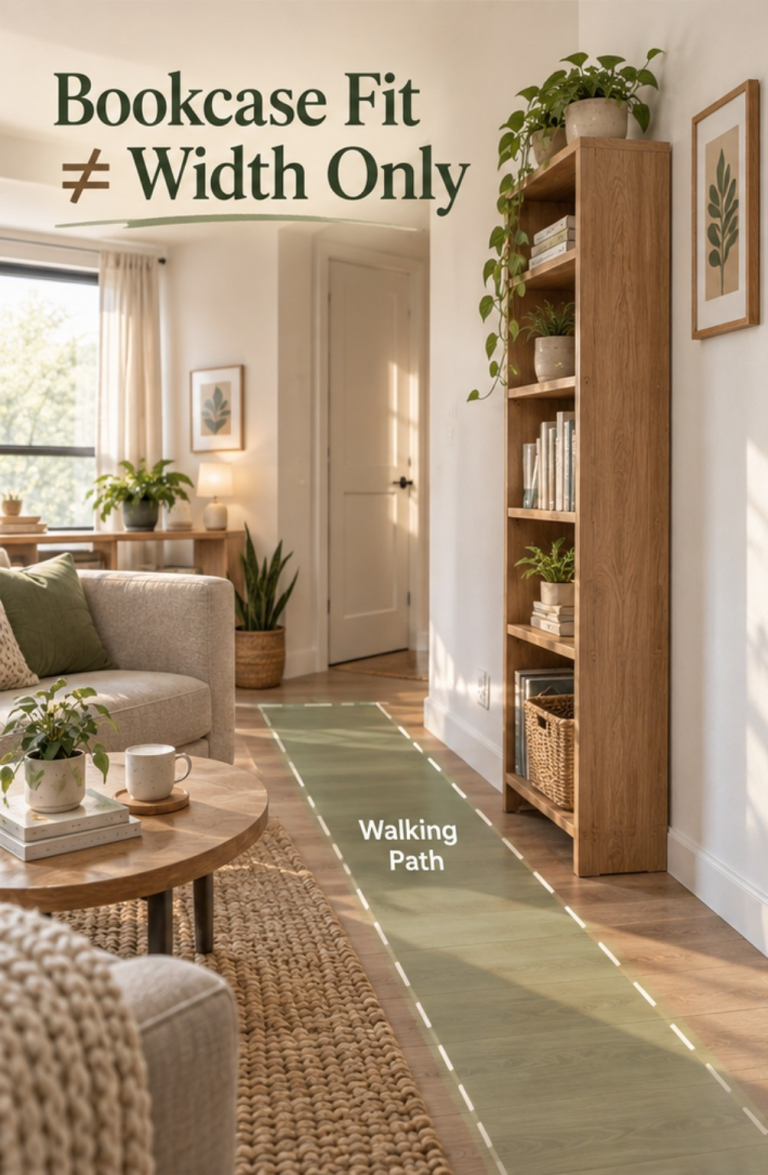
A product can fit across the closet and still protrude into the doorway or hanging-clothes zone.
Ignoring hanging drop
A hanging shelf uses vertical space below the rod. Measure where its bottom will end.
Buying drawers without checking front access
The product footprint does not tell you whether a drawer can actually open in your closet.
Treating stackable as unlimited stacking
Use stackability only when the manufacturer or retailer explicitly supports it, and do not invent a maximum stack count.
Assuming no-drill means damage-free
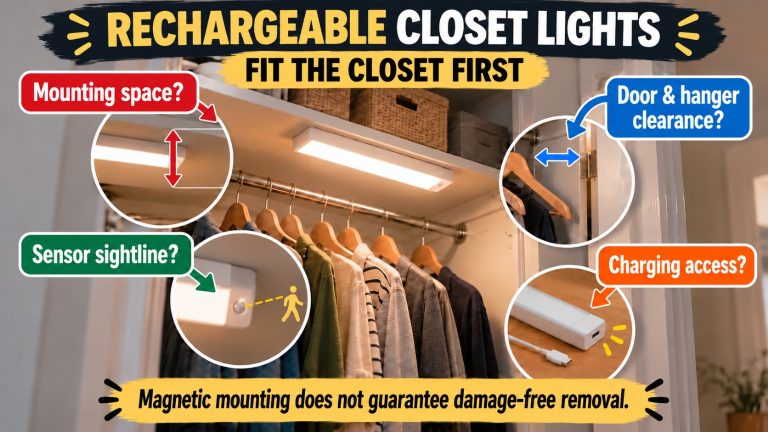
Those are different claims.
IKEA explicitly states that PÅLYCKE does not require drilling, but that does not establish how every shelf surface, finish, or lease condition will respond.
Choosing by capacity before installation
Installation and fit are the first filters. Capacity comes later.
FAQ
What measurements should I take before buying a closet organizer?
At minimum, record the usable width, depth, and vertical clearance of the intended storage zone.
Then add the measurement that matches the organizer role:
- rod width and hanging drop for hanging organizers,
- shelf thickness and below-shelf clearance for clip-on storage,
- floor footprint and front access for drawers,
- usable height for products you plan to stack.
Are hanging closet organizers useful in very small closets?
They can be relevant when you have usable rod width and enough vertical drop below the rod.
The important question is not whether the closet is “small,” but whether the organizer’s actual width, depth, and height fit the rod zone without interfering with garments or floor storage.
How much room do stackable drawers need to open?
There is no universal clearance number in this guide.
Use the product’s actual depth and drawer-opening direction, then check the real space in front of the drawer in your closet.
Should renters avoid wall-mounted closet organizers?
Not necessarily, but this guide keeps permanent or wall-dependent systems outside the primary shortlist because installation requirements can become a larger part of the buying decision.
Always check the product instructions and your own lease or property constraints before making permanent changes.
Is a deeper organizer always better for storage capacity?
No. Greater depth can increase usable volume in some products, but it can also create access or fit conflicts.
Compare capacity only after the organizer passes the installation, physical-fit, and access checks.
Can I combine hanging shelves and floor drawers in the same closet?
Potentially, but treat them as competing for the same vertical column.
Measure the hanging organizer’s full drop, the drawer unit’s total height, and the space needed to access both before buying.
If the closet cannot solve the storage need by itself, use the small-bedroom storage decision guide to compare closet, dresser, wardrobe, and bed-storage roles instead of forcing more into the closet. If product dimensions are unclear, use the furniture-dimensions verification method before treating width, depth, or height as settled.
Final Fit-First Checklist
Before buying a small closet organizer, recheck:
- Installation: What does it attach to or depend on?
- Width: Does it fit the usable span?
- Depth: Will it protrude into garments, doors, or access space?
- Height: Does it collide with hanging clothes or other storage?
- Access: Can drawers, bins, and shelves still be reached?
- Role: Does it solve the storage problem you actually have?
- Source limits: Are stackability, load, and compatibility claims explicitly supported?
Then compare price and retailer options.
The goal is not to fit the most storage into a closet.
It is to choose storage that fits the closet and remains usable after you install it.
Source Notes
Product facts in this draft are drawn from current manufacturer or major-retailer product pages reviewed during Article #004 Research on September 3, 2026.
Current prices and stock were not treated as permanent facts. Renternook has not physically tested these products.
Primary product sources:
- IKEA SKUBB: https://www.ikea.com/us/en/p/skubb-organizer-with-6-compartments-white-40300049/
- Target Brightroom Hanging Closet 6 Shelf: https://www.target.com/p/-/A-94939032
- IRIS USA 47 Qt: https://www.irisusainc.com/products/compact-stacking-stackable-plastic-drawer-unit-47-quart-white-2-count
- IRIS USA 6 Qt: https://www.irisusainc.com/products/6-quart-compact-stacking-drawer-4-pack-black
- IKEA PÅLYCKE: https://www.ikea.com/us/en/p/palycke-clip-on-basket-00534432/
- Target Brightroom 31″ Stackable Shelf: https://www.target.com/p/-/A-93155017
- Target Brightroom 2-Tier Bamboo Shoe Rack: https://www.target.com/p/-/A-93145379