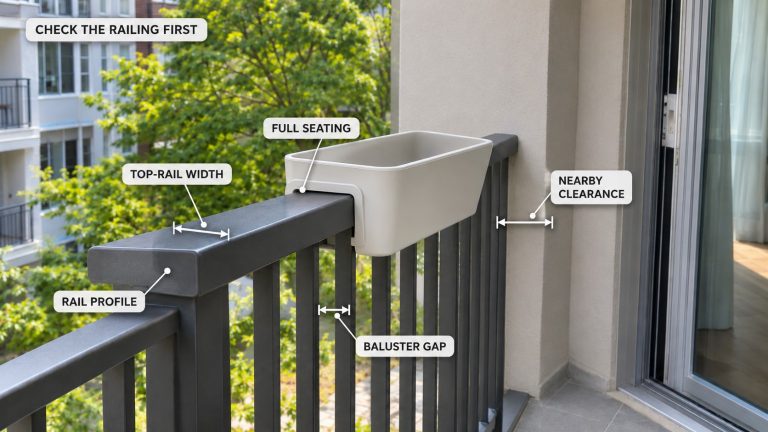
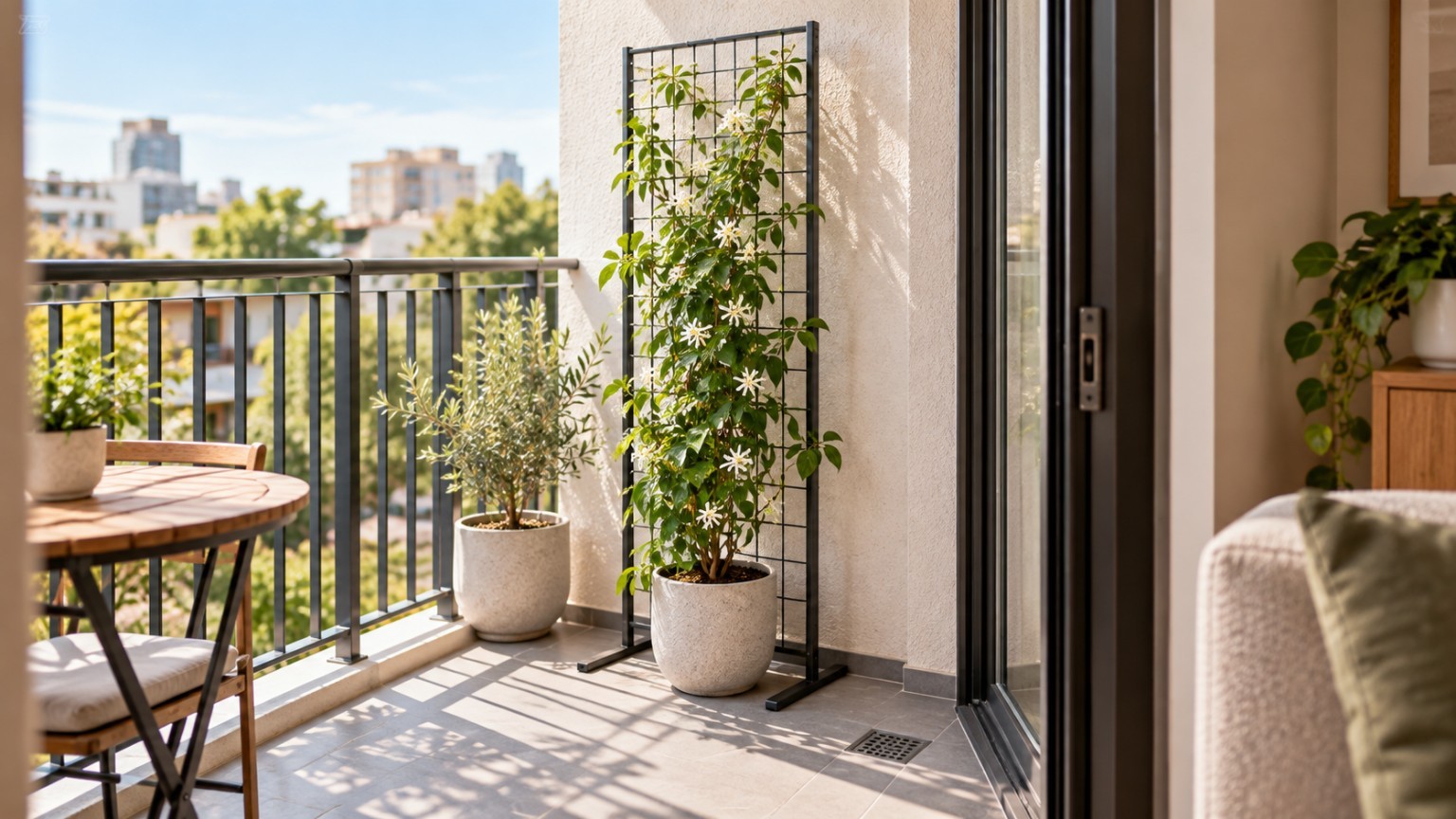
Freestanding Trellises for Apartment Balconies: What to Check Before You Buy
Quick Answer
A standalone freestanding trellis can give a climbing plant vertical support without drilling into a wall or installing an in-ground stake. For an apartment balcony, the first buying question is not how attractive the trellis looks. It is whether its base, width, height, and growing space fit the usable floor area while leaving the balcony functional.
Measure the actual placement zone, including door movement, walking clearance, and drainage access. Confirm the product’s real dimensions and intended use with the seller or manufacturer. A freestanding design does not by itself establish stability in wind or suitability for every balcony; building rules and exposure still need separate consideration.
1. Why a Freestanding Trellis Can Make Sense for Renters
A freestanding support may suit a renter who wants to guide climbing stems upward without making permanent holes. It can also be easier to reconsider the planting arrangement when seasons change or when moving out. That flexibility is a practical reason to consider this category, not a promise that every product is easy to move once a plant has grown through it.
Keep the category precise: this guide concerns a standalone plant support, not a wall-fixed panel, a stake driven into soil, or a planter-and-trellis combination. A separate pot and support may need to be planned together, but neither should be assumed to secure the other. Check the lease and building rules before adding balcony equipment.
2. Measure the Usable Balcony Footprint First
Sketch the balcony as it is used, not as an empty rectangle. Mark the door opening, the route to the railing, drains, existing pots, outdoor furniture, and any areas that must stay accessible. Measure the clear width and depth at the proposed location, including irregular edges and protruding fixtures.
Next, compare those usable dimensions with the complete base footprint of the trellis. A narrow decorative upper section does not tell you how much floor space the feet occupy. Leave a margin for watering, pruning, and retrieving fallen leaves. Do not treat a tight fit against a door or walkway as a workable fit.
3. Check Height Against the Real Balcony Space
Measure from the actual floor surface to the lowest relevant obstruction: an overhead balcony slab, awning, light fixture, or other feature. A tall support might fit on paper yet leave too little space to train new shoots or reach the upper portion for care.
Think about how the trellis arrives and moves into place, too. A tall assembled frame may be difficult to maneuver through the apartment door or around a corner. Verify assembled dimensions and assembly requirements from the exact listing; do not infer them from a product photograph.
4. Allow Room for the Plant to Grow and Spread
The trellis is only part of the occupied space. A climbing plant can extend beyond the frame, and its pot needs room for routine care. Estimate the growing zone in front of and to the sides of the support, not just its bare frame width. Choose a placement that permits watering and pruning without leaning over a railing.
Plant selection matters, but this is not a landscaping guide. Use the plant’s expected habit and your own maintenance routine to judge whether a narrow vertical support is enough. Avoid promising that a particular trellis will carry a mature plant without a documented product rating and an assessment of the actual planting setup.
5. Check Base, Footprint, and Stand Clearance
Look closely at the lower structure. Are the feet wider than the upper panel? Do they occupy the same space as a pot, chair leg, or door path? Can the base sit as intended on the actual balcony floor without obstructing drainage? These questions should be answered from verified product details and measurements.
A base that appears broad in a photo is not evidence of a wind rating, safe load, or required ballast. Do not improvise anchoring to a railing or assume that adding weight makes a product safe. If the site is exposed to significant wind, has a fall hazard, or is governed by specific building restrictions, resolve those conditions separately before purchasing.
6. Panacea 84451 vs MyGift Expandable Freestanding Plant Screen: Practical Roles
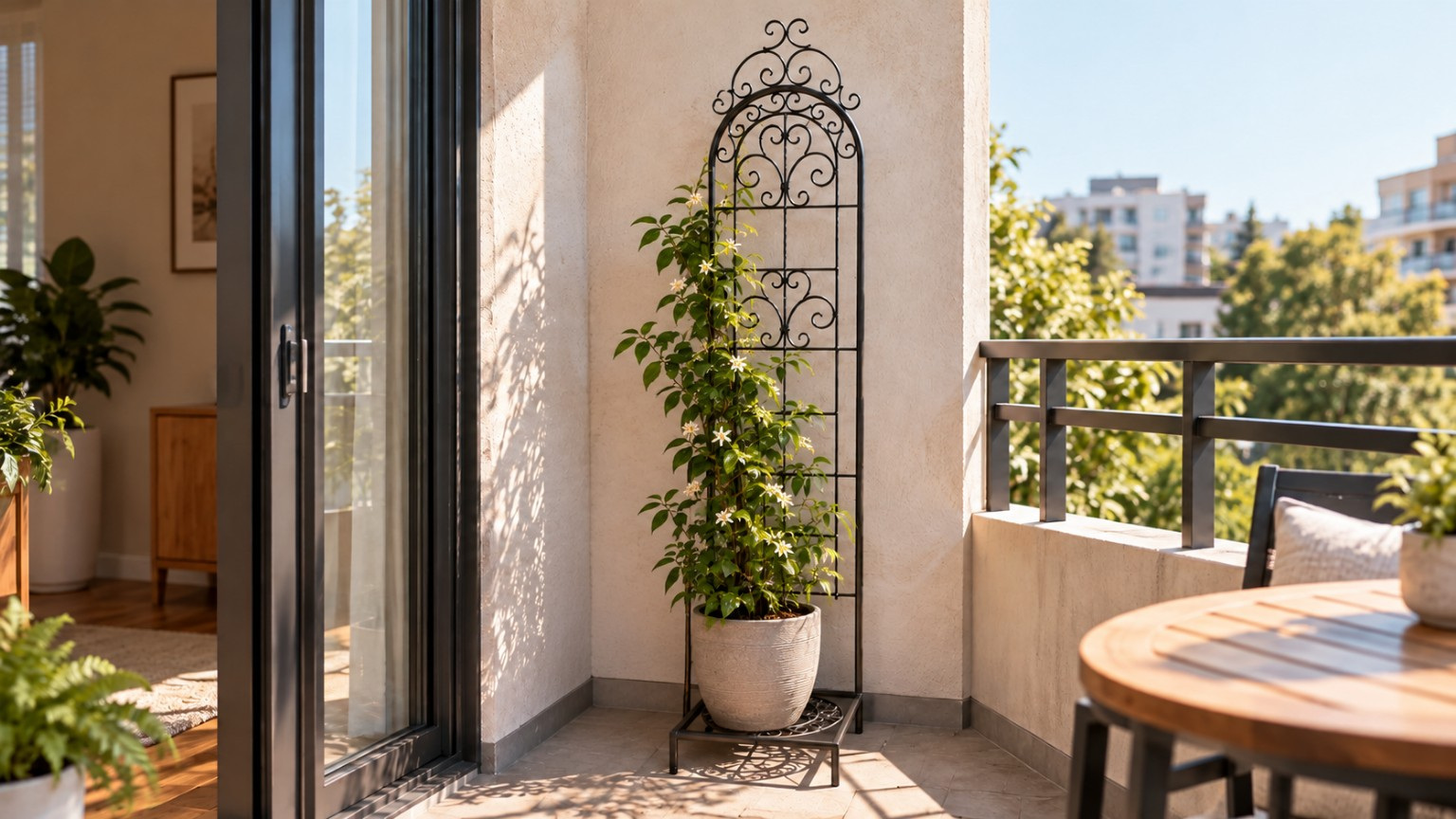
Two locked examples illustrate different forms of standalone vertical support: Panacea 84451 (PAP-84451) and the MyGift Expandable Freestanding Brown Wood Garden Fence Plant Screen, identified in the research record by Walmart item 246877076. They are examples to compare for fit, not ranked winners or interchangeable specifications.
For the Panacea 84451, verify the exact overall dimensions, base arrangement, assembly method, and the way the intended plant would be guided on the support.
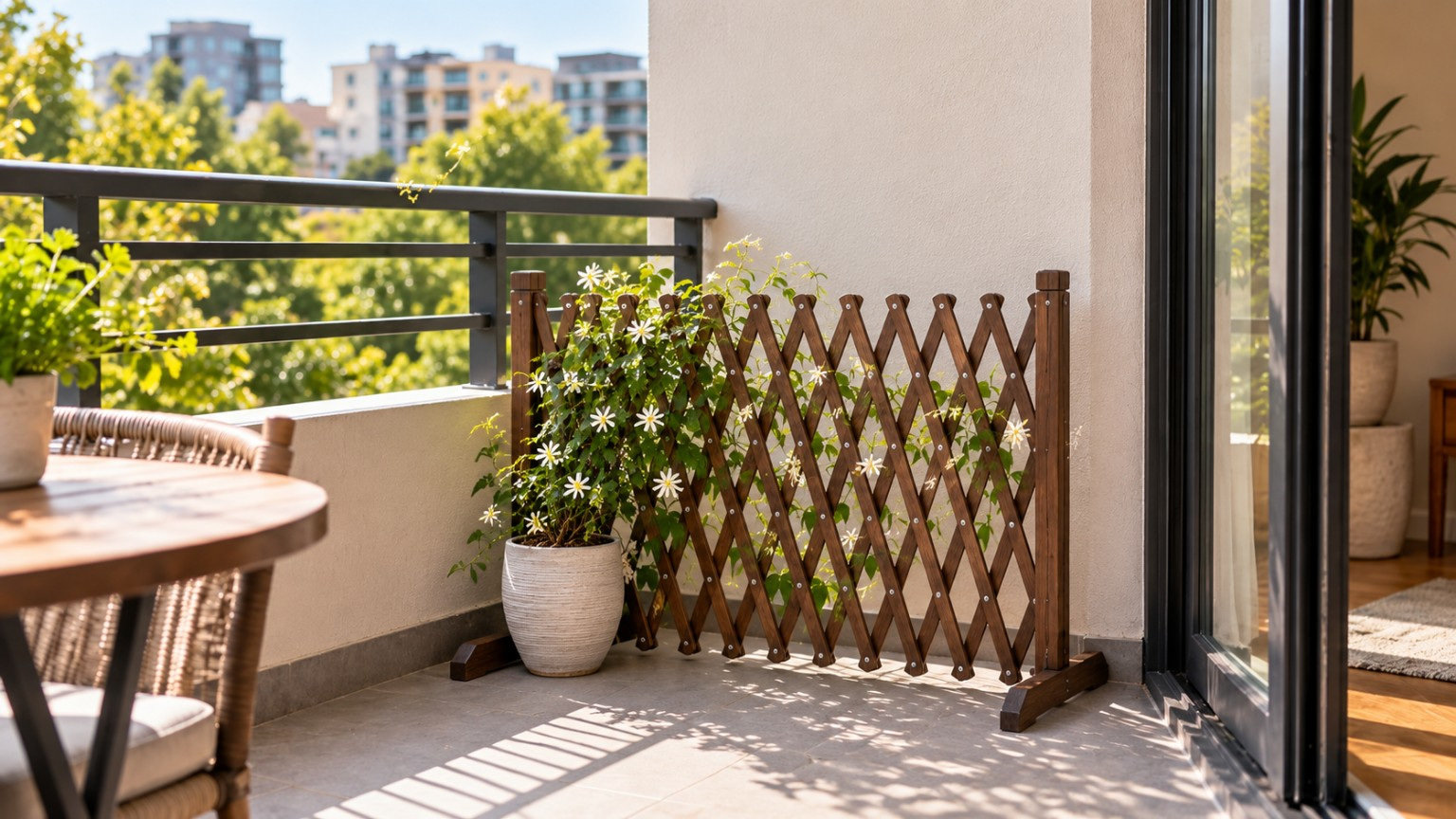
For the expandable MyGift form factor, check both the selected expanded width and the corresponding floor footprint; an adjustable-looking screen still needs usable clearance and appropriate placement.
Do not assume that either product has a documented wind-load capacity, a specific ballast requirement, or building approval. The available locked information does not establish those values. Compare only attributes supported by the exact product documentation and confirm that the seller’s current listing matches the product identity before buying.
7. Keep Access to Doors, Walkways, and Drainage
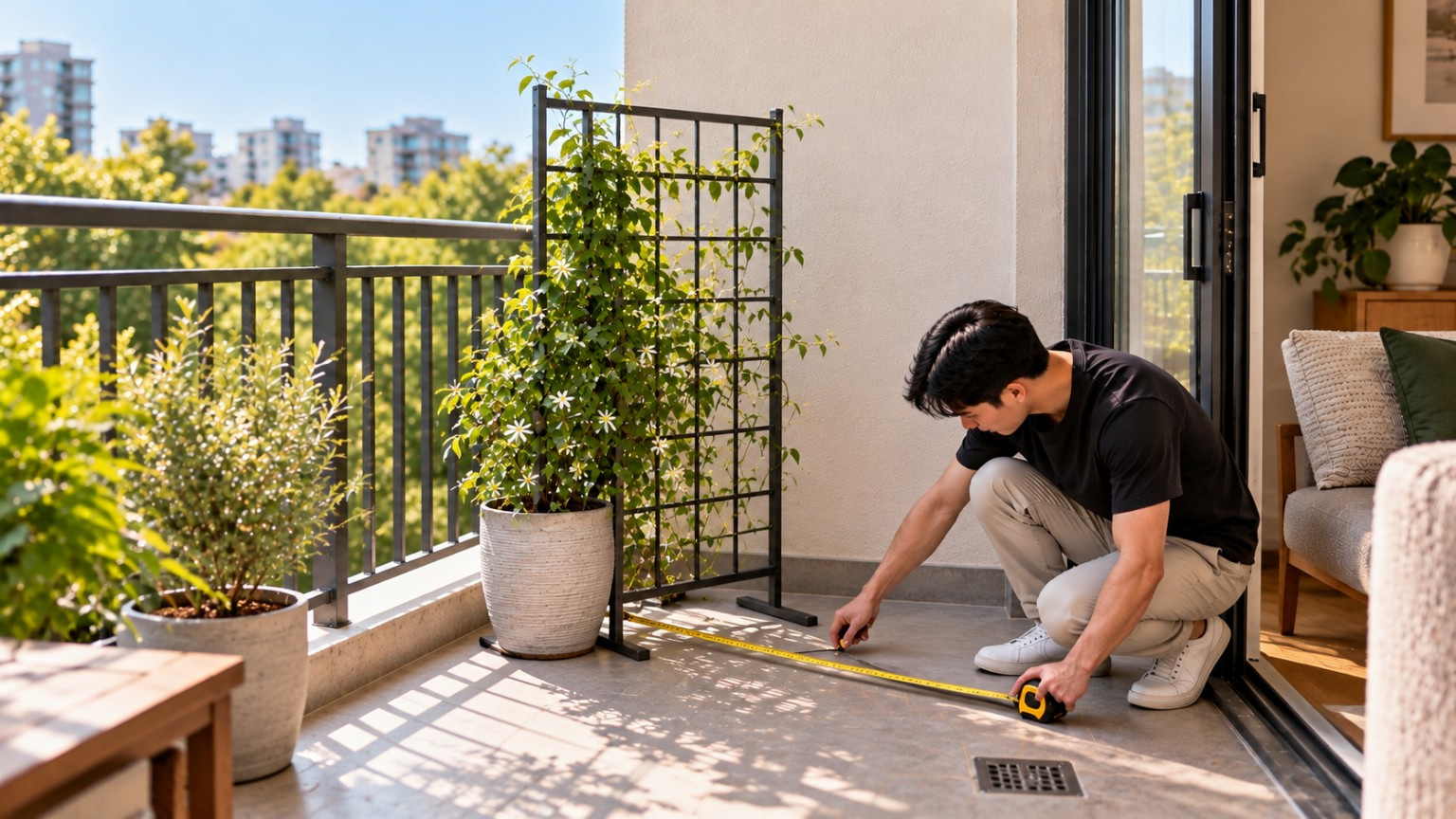
Open the balcony door fully while checking the proposed placement. Walk the route you normally use to water plants or access the balcony. A freestanding structure that blocks a door swing, narrows an essential path, or makes a drain hard to reach can create daily inconvenience even when its dimensions technically fit.
Check where water flows and where leaves collect. Keep drainage points accessible for inspection and cleaning, and consider how the arrangement will work when the plant becomes larger. Avoid treating the trellis as a barrier, railing attachment, or privacy screen; those are different design and safety questions.
8. What a Freestanding Trellis Does Not Solve
Freestanding does not mean universally safe, windproof, or approved by a landlord or building manager. It does not establish that a railing can support an attachment, and it does not guarantee that the support can hold any plant at any stage of growth. Wind exposure, falling-object risk, and building rules vary widely.
It also does not remove the need to plan for plant care, drainage, and movement. If your situation requires structural assurance, a specific load limit, or permission under building rules, obtain that information from qualified or authoritative sources rather than relying on a generic shopping guide.
9. What to Check Before Buying
Record the available floor width and depth, usable height, door swing, walking route, and drainage access. Then record the trellis’s verified assembled dimensions, full base footprint, and any documented instructions for use. Check whether the form factor leaves space for the pot, future growth, and hands-on maintenance.
Confirm the exact product identity, seller documentation, delivery dimensions, return terms, and any assembly or placement restrictions. If essential dimensions or safety information are missing, treat them as unknown rather than estimating them from photos. When exposure, fall risk, or building permission is material, settle those issues before placing an order.
Bottom Line
Buy a standalone freestanding trellis for a measured balcony footprint and a realistic plant-care workflow, not merely for an appealing picture or a claim of easy installation. The Panacea 84451 and MyGift expandable freestanding screen offer two forms to evaluate, but neither should be treated as automatically suitable for every balcony.
Measure the floor area, usable height, growth zone, access paths, and base clearance first. Verify product-specific dimensions and instructions second. Keep wind performance, load capacity, ballast, and building approval explicitly unverified unless reliable documentation resolves them. A good fit is one you can use, maintain, and remove without making unsupported safety assumptions.