
Portable Air Conditioners for Small Apartments: Check the Full Working Fit Before You Buy
A portable air conditioner can fit inside a small apartment and still be a poor fit for the room where you actually need to use it. The cabinet may fit beside a desk or bed, but the window kit may not match the window. The exhaust hose may have no clean route. Condensate handling may become awkward. The power connection may still need verification. And once the unit is operating, the space around it may be very different from the space it occupies when switched off.
That is why buying a portable air conditioner for a small apartment should start with working fit, not just cabinet dimensions or a room-size number on the product page.
A useful way to think about the decision is:
body fit ≠ cooling-capacity fit ≠ window/exhaust interface fit ≠ hose-route fit ≠ drainage fit ≠ operating-location fit
Passing one check does not prove the next one.
This guide uses three non-ranked portable AC models to show how materially different fit architectures change the pre-buy questions you need to answer:
- Hisense AP1022CW1G — single-hose / single-duct reference
- Hisense AP1022TW1GD — classic dual-hose design with two separate air hoses
- Midea MAP12S1TBL — dual-hose, hose-in-hose architecture
The goal is not to name a winner. It is to help you determine whether an exact model can work with your room, window, exhaust route, condensate state, power connection, and normal operating location.
Start With the Exact Model, Not the Product Family
Portable AC specifications are easy to mix across sibling models, regional versions, and retailer pages. That can create a false fit conclusion before you even measure the room.
Start by recording the exact model number you plan to buy. Then keep every later specification tied to that model.
For the three examples in this guide, the exact models are:
- Hisense AP1022CW1G
- Hisense AP1022TW1GD
- Midea MAP12S1TBL
Do not fill a missing field with a number from a similar-looking model. If a required specification is not established for the exact product, treat it as unknown until you can verify it.
That rule matters because an unknown value is not the same as zero, and it is not evidence of either a pass or a fail.
Check the Cooling Rating Basis Before Comparing Numbers
Cooling numbers are not useful unless you know what rating basis they use.
For the Hisense AP1022CW1G and AP1022TW1GD, the established SACC value is 10,000 BTU. For the Midea MAP12S1TBL, the U.S. cooling basis used here is 10,000 BTU DOE / SACC role.
Do not combine or normalize SACC and ASHRAE figures as though they are interchangeable. The U.S. ASHRAE figure is not established in the evidence used here for these three exact models.
Manufacturer room-size statements should also stay in their proper role. Hisense markets the AP1022CW1G for rooms up to 450 sq ft and the AP1022TW1GD for rooms up to 550 sq ft. Those are manufacturer room-size marketing claims, not guarantees that either unit will cool every room of that size equally well.
Room shape, heat load, sun exposure, insulation, occupancy, and other conditions can matter. This article does not rank cooling performance; it treats the published capacity basis as one step in a larger fit check.
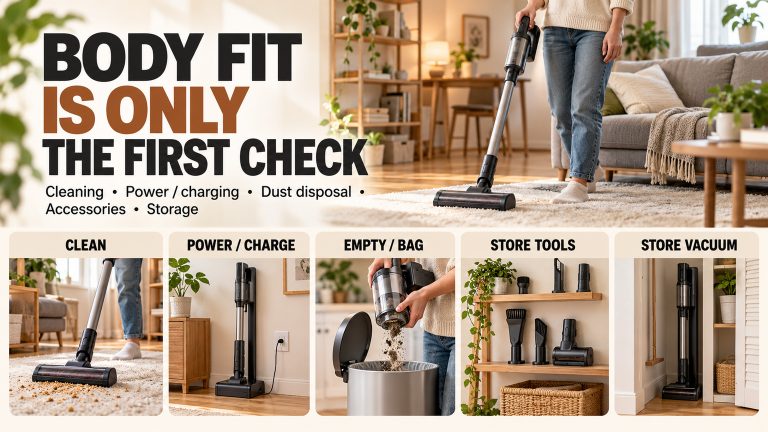
Body Fit Is Only the First Physical Check
The closed cabinet has to fit where you plan to place it, but cabinet size is only the starting geometry.
Hisense AP1022CW1G
- 17.40 in W × 28.27 in H × 14.69 in D
- 74.9 lb
Hisense AP1022TW1GD
- 17.40 in W × 28.27 in H × 14.69 in D
- 69.9 lb
Midea MAP12S1TBL
- 19.53 in W × 16.73 in D × 32.48 in H
- 72.75 lb
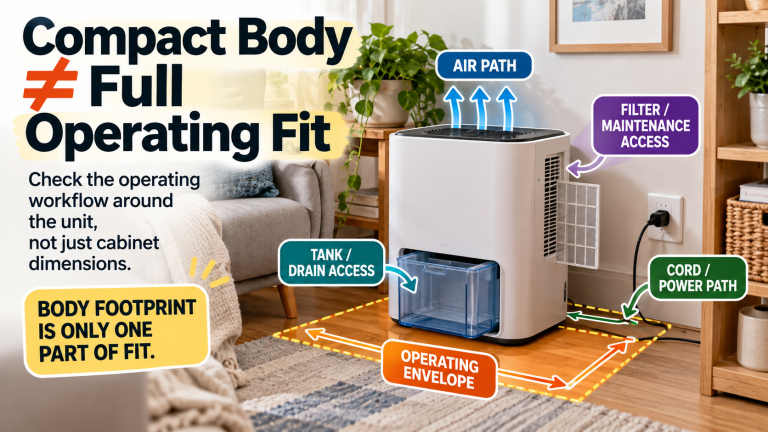
Those dimensions tell you whether the cabinet can occupy a particular patch of floor. They do not tell you whether the full system can operate there.
Before buying, measure the actual location and then add the interfaces the appliance needs: the window connection, hose route, drainage access if required, power connection, and space needed to move or service the unit.
For the Midea MAP12S1TBL, the documented operating surface is flat and sturdy. Do not assume that rolling or operating behavior on thick carpet is acceptable simply because the unit has four wheels.
A Portable Air Conditioner Still Depends on the Window Interface
The word “portable” can make the installation side of the decision sound easier than it is. A portable unit still needs a compatible exhaust interface, and the window kit has to work with the actual window in your apartment.
The most useful sequence is:
- Identify the exact window type.
- Measure the opening in the orientation the kit will use.
- Compare that measurement with the exact product’s documented window-kit range.
- Confirm that the panel and frame can actually form the intended interface.
- Only then assess the hose route from the unit to the window.
A published minimum and maximum does not prove universal window compatibility.
Hisense AP1022CW1G window evidence
The current product-page basis gives a 18–50 in window range. However, a full orientation-specific range is not fully established in the evidence used here.
That means the number is useful as a screening field, but it should not be turned into a claim that every 18–50 in window will work.
Hisense AP1022TW1GD window evidence
For this model, the established ranges are more specific:
- Vertical sliding window: 25–50 in wide
- Horizontal sliding window: 18–50 in high
Other window types are not established here.
Midea MAP12S1TBL window evidence
The documented window-kit range is 19.1–63.8 in, with documented installations for hung windows and sliding windows.
That still does not establish universal window fit. Window type, frame geometry, orientation, and the actual panel interface remain part of the decision.
If your apartment uses a window type that is not established for the exact model, keep that compatibility state unknown until you verify it. Do not solve the gap by assuming that another model’s kit or another region’s documentation applies.
Hose Architecture Changes the Fit Problem
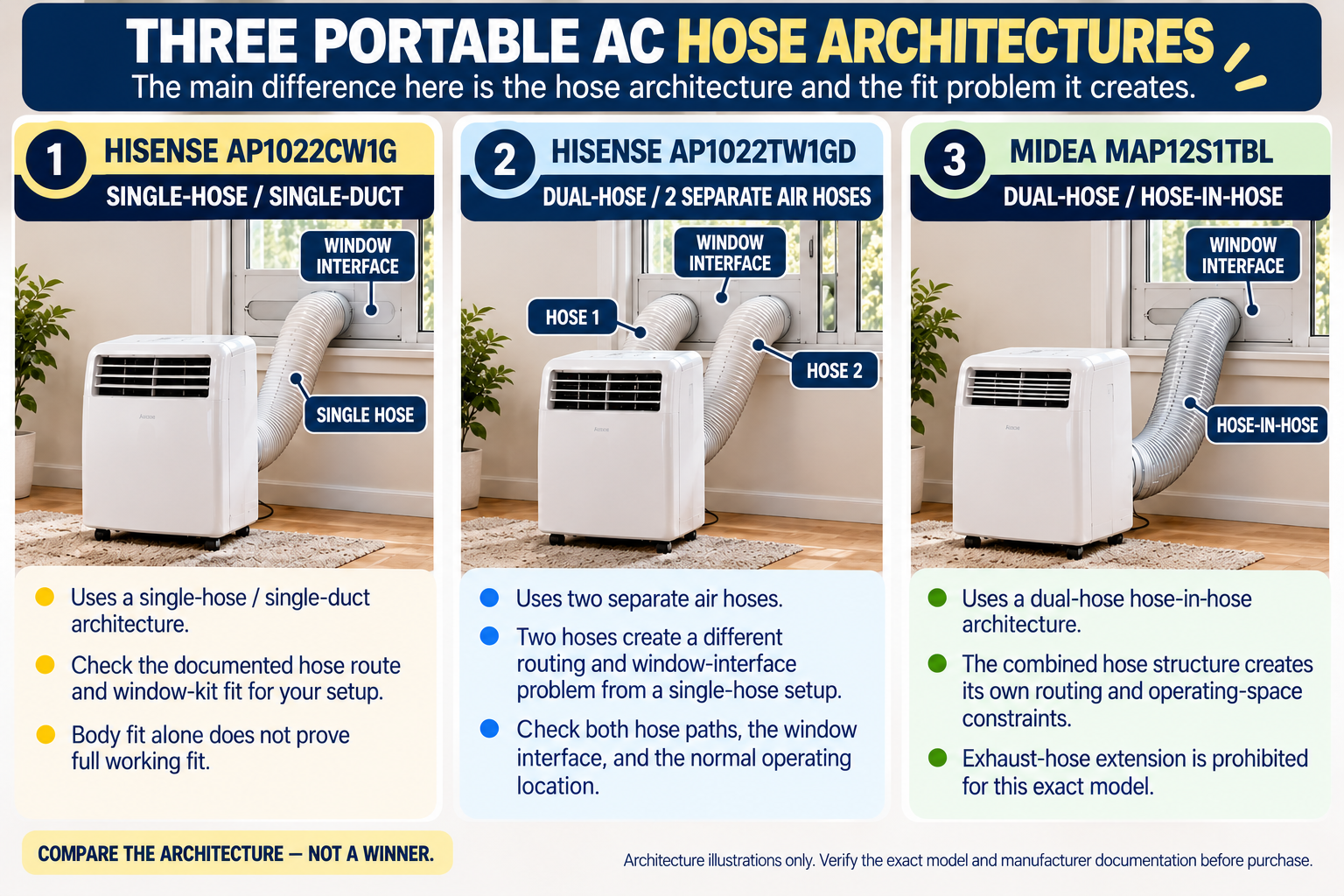
The three products look similar at a category level, but their exhaust architectures are materially different.
Single hose: Hisense AP1022CW1G
The AP1022CW1G uses a single duct / one-hose architecture.
The established hose is:
- 5.9 in diameter
- 59 in long
This creates a single physical hose route between the appliance and the window interface.
Two separate hoses: Hisense AP1022TW1GD
The AP1022TW1GD uses a double-duct design with two separate air hoses.
The established hose configuration is:
- 2 hoses
- each 5.9 in diameter
- each 59 in long
Even though the body dimensions match the AP1022CW1G, the hose-routing problem is different because two separate hoses need to connect between the unit and the window setup.
Hose-in-hose: Midea MAP12S1TBL
The MAP12S1TBL uses a dual-hose, hose-in-hose architecture.
The exact hose length is unknown in the evidence used here, so do not invent a reach distance. What is established is the routing control:
- do not overextend the hose
- do not bend it
- keep objects at least 20 in / approximately 500 mm from the inlet/outlet hose area
- exhaust-hose extension is prohibited
That last point is especially important in a small apartment. If the intended location only works by adding an exhaust-hose extension, this exact model should not be treated as compatible with that plan.
Single-hose, two-separate-hose, and hose-in-hose designs are not interchangeable, and no one architecture should be treated as universally better. Each changes the geometry you must solve.
Check the Hose Route in the Normal Operating State
A cabinet can fit perfectly and still leave you with a bad hose path.
Before buying, sketch or physically measure the route from the unit’s intended operating location to the window interface. Do this using the real furniture layout, not an empty-room assumption.
Check for:
- sharp turns
- furniture blocking the route
- a path that would require overextension
- a location that forces the unit too far from the window
- objects crowding the inlet or outlet zone
- a hose route that crosses a walkway or creates a daily-use conflict
Do not extend, shorten, modify, or reconfigure an exhaust hose unless the exact product evidence permits it.
For the Midea MAP12S1TBL, exhaust-hose extension is explicitly prohibited. For the other products in this guide, do not infer permission to modify the hose simply because no extension rule is listed here.
The practical question is not “Can I make the hose reach somehow?” It is “Can this exact hose architecture operate in the planned route without requiring an unsupported modification?”
Condensate Handling Is Part of Working Fit
Portable AC drainage is another area where simplified product language can be misleading.
“Auto evaporation” or similar wording should not be translated into “this unit will never need draining.”
Hisense AP1022CW1G
Normal evaporative operation is published, but the unit also has primary and secondary drain ports.
So the safe conclusion is not “drain-free.” The established conclusion is that evaporative handling exists while drain states also exist. An all-condition no-drain guarantee is not established.
Hisense AP1022TW1GD
Normal evaporative handling is published for this model as well, but a manual-drain state exists, and the unit requires draining before storage.
Again, evaporation does not eliminate drainage from the fit check.
Midea MAP12S1TBL
The established drain evidence includes:
- a dry-mode drain-hose workflow
- a bottom-tray P1 full state that requires manual draining
That means the planned location should not make drainage impractical. If your placement blocks drain access or makes a drain-hose route impossible when a required state occurs, body fit alone has not solved the setup.
Verify Power Separately
Power should be checked from exact-model evidence, not borrowed from a sibling product or another region.
Hisense AP1022CW1G
Established power fields include:
- 115 V
- 60 Hz
- manufacturer amp field: 10.6 / 12 A
- LCDI, NEMA 5-15P
- cord: 4.9 ft / 1.5 m
- wattage: unknown
Hisense AP1022TW1GD
Established power fields include:
- 115 V
- 60 Hz
- manufacturer amp field: 11 / 12 A
- LCDI, NEMA 5-15P
- cord: 4.9 ft / 1.5 m
- wattage: unknown
Midea MAP12S1TBL
The complete U.S. power set is unknown in the evidence used here. Do not fill that gap with Canadian power data or a specification from a related Midea model.
For any model, verify the actual outlet and power requirements before purchase. Do not treat physical proximity to an outlet as proof that the electrical setup is appropriate.
Three Portable AC Fit Architectures Compared
This table is intentionally non-ranked. Its purpose is to show which fit questions change with architecture, not to name a best portable air conditioner.
| Exact model | Body size | Weight | SACC / DOE basis | Hose architecture | Hose length | Window-kit range | Drain state | Power state | Material unknown |
|---|---|---|---|---|---|---|---|---|---|
| Hisense AP1022CW1G | 17.40 W × 28.27 H × 14.69 D in | 74.9 lb | 10,000 BTU SACC | Single duct / 1 hose | 59 in; 5.9 in diameter | 18–50 in current product-page basis; full orientation-specific range not fully established | Normal evaporative operation published; primary and secondary drain ports exist | 115 V, 60 Hz; 10.6 / 12 A; LCDI NEMA 5-15P; 4.9 ft cord | ASHRAE, wattage, full orientation-specific window range |
| Hisense AP1022TW1GD | 17.40 W × 28.27 H × 14.69 D in | 69.9 lb | 10,000 BTU SACC | Dual hose / 2 separate air hoses | 2 × 59 in; 5.9 in diameter each | Vertical sliding: 25–50 in wide; horizontal sliding: 18–50 in high | Normal evaporative handling published; manual-drain state exists; drain before storage required | 115 V, 60 Hz; 11 / 12 A; LCDI NEMA 5-15P; 4.9 ft cord | ASHRAE, wattage, other window types |
| Midea MAP12S1TBL | 19.53 W × 16.73 D × 32.48 H in | 72.75 lb | 10,000 BTU DOE / SACC role | Dual hose / hose-in-hose | Unknown | 19.1–63.8 in; hung and sliding installations documented | Dry-mode drain-hose workflow; bottom-tray P1 full state requires manual drain | Complete U.S. power set unknown | U.S. ASHRAE, exact hose length, universal window fit, complete U.S. power set |
The table also shows why false comparability is risky. Two units can share a 10,000 BTU SACC role and still present very different window, hose, drainage, and placement problems.
How to Use the Three Examples Without Turning Them Into a Ranking
Hisense AP1022CW1G: the single-hose reference
The AP1022CW1G is useful when you want to understand the simplest of the three exhaust-routing architectures in this comparison: one cabinet, one exhaust hose, and one window interface.
Its body is 17.40 inches wide, 28.27 inches high, and 14.69 inches deep. The 59-inch hose is a concrete routing constraint. The current 18–50 inch window-range basis is useful for screening, but it should not be treated as a universal orientation-specific fit guarantee.
The drainage evidence is also a good reminder that evaporative operation does not remove drain planning from the decision. Primary and secondary drain ports still exist.
Hisense AP1022TW1GD: the two-separate-hose reference
The AP1022TW1GD shares the same published body dimensions as the AP1022CW1G, yet its fit problem changes because it uses two separate hoses.
That difference matters in a small apartment. A floor location that looks acceptable for a single hose may be awkward once two 5.9-inch-diameter, 59-inch hoses must reach the window interface.
Its window evidence is more orientation-specific: 25–50 inches wide for a vertical sliding window and 18–50 inches high for a horizontal sliding window. Other window types should remain unknown here rather than being inferred.
Midea MAP12S1TBL: the hose-in-hose reference
The MAP12S1TBL uses a different dual-hose implementation: hose-in-hose rather than two separate air hoses.
Its body is taller than the two Hisense examples at 32.48 inches, and the exact hose length is not established here. That unknown should not be converted into an assumed reach.
What is established is more operationally important: the hose should not be overextended or bent, objects should not crowd the inlet/outlet hose zone within 20 inches, and exhaust-hose extension is prohibited.
This makes the planned operating location and window distance central to the decision before purchase.
A Practical Pre-Buy Fit Check for a Small Apartment

Use this sequence for the exact portable AC you plan to buy.
1. Lock the exact model
Write down the full model number. Do not use a product-family name as a substitute.
2. Record the capacity basis
Identify whether the published cooling figure is SACC / DOE, ASHRAE, or another basis. Do not merge unlike ratings.
3. Measure the body footprint
Confirm width, depth, and height against the real floor location. Include the path needed to move the unit into place.
4. Identify the actual window type
Do not stop at opening width or height. Record whether the window is hung, horizontal sliding, vertical sliding, or another type, and compare it with the exact model’s documented installation evidence.
5. Check the window-kit range
Compare the measured opening with the model’s documented range. A number inside the range is a screening pass, not proof of universal frame compatibility.
6. Identify the hose architecture
Is it single hose, two separate hoses, or hose-in-hose? This changes the space required between the unit and the window.
7. Trace the real hose route
Check length, bends, obstacles, furniture conflicts, required clearances, and any product-specific prohibition on extension or modification.
8. Map every drainage state
Ask what happens in normal cooling, dry mode, full-tray conditions, and storage preparation. Make sure the location allows any required manual drain or drain-hose workflow.
9. Verify power
Confirm the exact model’s voltage, frequency, plug, cord, amp or other required fields from its own documentation. Keep missing values unknown rather than borrowing them.
10. Check the normal operating state
Stand where the unit will actually run. Confirm that the cabinet, hose route, window connection, drain access, power cord, inlet/outlet area, and daily walking path can coexist.
Only after all of those checks pass do you have evidence of a workable setup rather than a cabinet that merely fits on the floor.
What to Keep Unknown Until You Verify It
Some missing specifications are material enough that guessing can create the wrong purchase decision.
For the products in this guide, examples include:
- the U.S. ASHRAE figure where it is not established
- wattage where it is not established
- exact Midea hose length
- universal window compatibility
- window types not established for a particular kit
- the complete U.S. Midea power set
Do not backsolve those values from category norms, retailer pages for similar models, Canadian data, or sibling products.
Unknown is a legitimate evidence state. It tells you what still needs verification before purchase.
Final Takeaway
The best way to evaluate a portable air conditioner for a small apartment is to stop treating “fit” as one measurement.
The cabinet has to fit, but so does the cooling-rating basis you are comparing, the window interface, the exhaust architecture, the hose route, the condensate plan, the power connection, and the normal operating location.
The Hisense AP1022CW1G, Hisense AP1022TW1GD, and Midea MAP12S1TBL show why that sequence matters. One uses a single hose, one uses two separate hoses, and one uses a hose-in-hose design. None of those architectures should be treated as a universal winner; each creates a different fit problem to solve.
Before you buy, verify the exact model step by step. If a material field is not established, keep it unknown until you can confirm it. A portable AC that passes the full working-fit check is much more useful than one that only fits the empty patch of floor where you hoped to put it.