Compact Cordless Screwdrivers for Furniture Assembly: Check Grip, Screw Access, Torque Control, and Charging Before You Buy
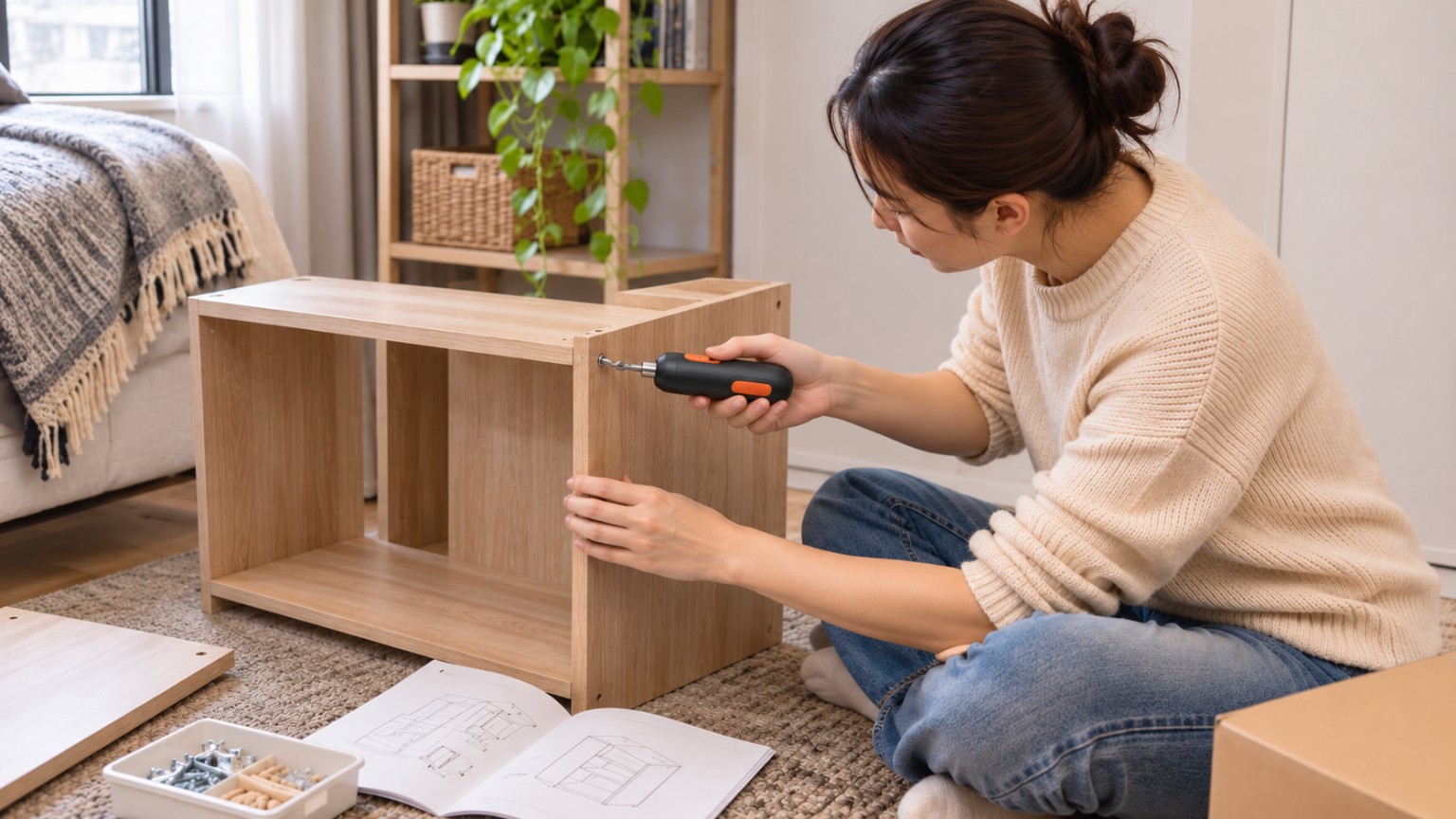
Compact cordless screwdrivers can make flat-pack and small-furniture assembly less repetitive, especially when a project has many similar screws. But a small power tool is not automatically the right tool for every fastener. The body still has to fit the screw location, the bit still has to seat correctly, the user still needs hand clearance, and the furniture instructions may require hand-tightening or a specific assembly sequence.
Before buying, think about the whole assembly workflow rather than only voltage or torque. Check the screw locations, corner access, grip position, bit changes, charging method, and the point where power driving should stop and final hand-tightening should begin.
Quick answer: match the screwdriver to the assembly sequence, not just the screw
Start with the furniture instructions. Identify which fasteners may be driven with a power tool and which steps call for hand tools or final hand-tightening. Then inspect the physical access around each screw location. A compact screwdriver can still be too bulky for a recessed corner, too long for an inside panel, or awkward when your hand must approach at an angle.
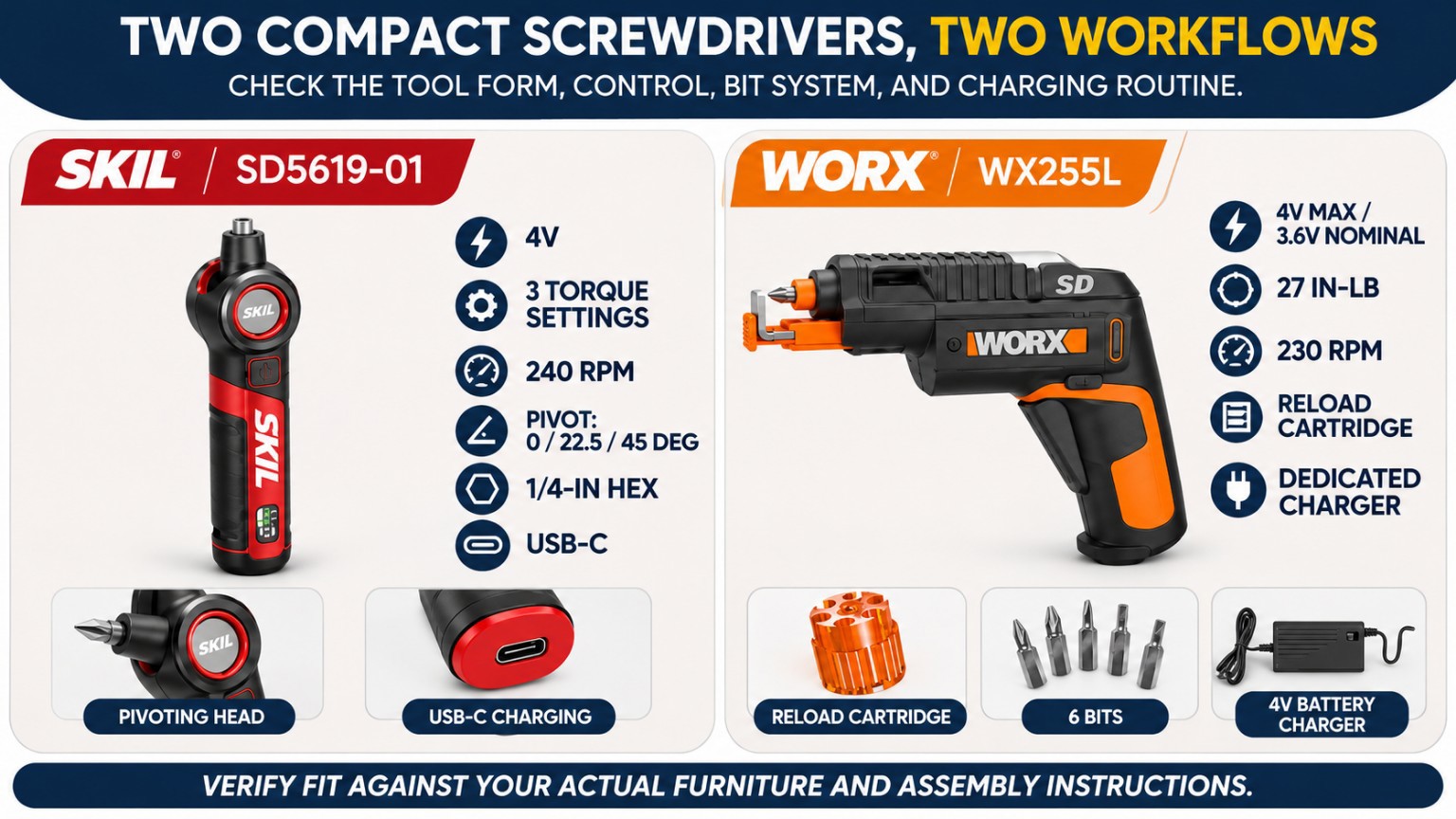
Two locked products illustrate different workflow questions. The SKIL SD5619-01 is a 4V integrated-lithium screwdriver with USB-C charging, three torque settings, a published torque range of 3.5–22 in-lb, 240 RPM, a 1/4-inch hex chuck, PH2 and SL6 bits, forward/reverse, a three-position pivot at 0, 22.5 and 45 degrees, a maker-stated size of 7.3 × 1.5 × 2 inches, a maker-stated weight of 0.8 lb, and an LED. The WORX WX255L is a 4V Max / 3.6V nominal screwdriver with a 1.5Ah battery, dedicated charger, 27 in-lb torque, 230 RPM, a 1/4-inch hex reload cartridge, screw holder, forward/reverse, a retail-stated size of 6.5 H × 1.8 W × 6 D inches, a maker-stated weight of 1.1 lb, and an LED.
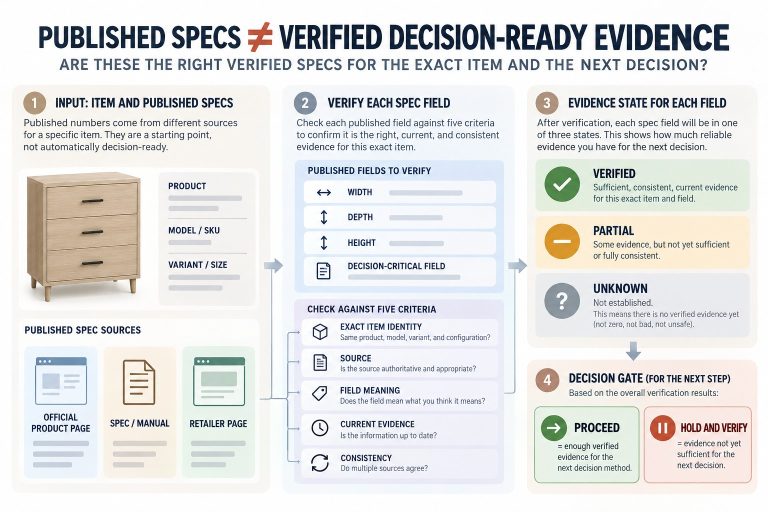
Those specifications describe the tools. They do not prove that either tool is appropriate for every furniture fastener, that either tool prevents overtightening, or that either one can replace the furniture maker’s final hand-tightening instructions.
1. Start with the screw location, not the tool spec sheet
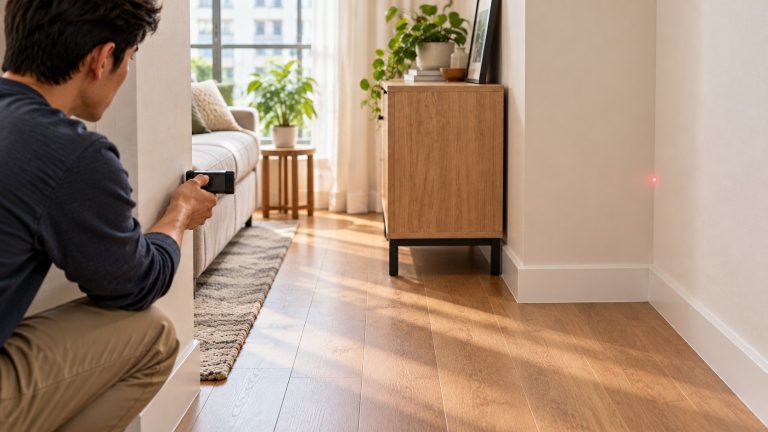
Before comparing tools, inspect where the screws actually sit. Flat-pack furniture often puts fasteners close to side panels, under shelves, inside narrow frames, or near corners where a straight approach is impossible.
Measure or visually check three things:
- the distance from the screw head to the nearest wall or panel;
- the room your hand needs around the grip;
- the angle required to keep the bit seated in the screw.
A tool can look compact on a product page and still be awkward once the furniture panel blocks your wrist. If the screw is recessed, also consider the length of the bit and whether the chuck or cartridge body can enter the space without contacting the furniture.
2. Check tool body size and grip access
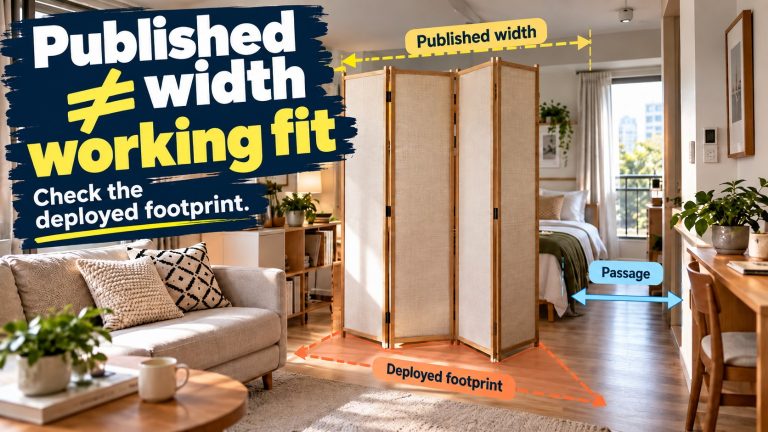
Compact dimensions matter most when they relate to the actual screw location and available working space. The SKIL SD5619-01 is maker-stated at 7.3 × 1.5 × 2 inches and 0.8 lb. The WORX WX255L is retail-stated at 6.5 H × 1.8 W × 6 D inches and maker-stated at 1.1 lb.
Do not compare those numbers as if they were measured using the same orientation convention. They come from different published descriptions and should be treated as product-specific reference dimensions.
For real assembly work, ask:
- Can the handle clear the adjacent panel?
- Can your fingers stay on the controls without scraping the furniture edge?
- Can you keep the bit aligned while holding the panel in position?
- Will the tool still fit when a shelf, drawer rail, or cross brace is already installed?
The useful size is the size that fits the step you are performing.
3. Corner and edge access can decide whether the tool is practical
A furniture assembly sequence can become tighter as more panels are added. A screw that is easy to reach on an open frame may become difficult once the next panel is installed.
The SKIL SD5619-01 has a pivot feature with 0, 22.5 and 45 degree positions. That gives the user more than one body orientation, but it does not guarantee access to every corner or recessed fastener. The WORX WX255L has a different body and cartridge workflow, so its practical access should be checked against the same screw locations rather than assumed from torque or voltage alone.
When possible, look at the furniture assembly diagram before buying the tool. Identify the tightest screw location and use that location as the fit test.
4. Torque control helps only when you understand what the furniture requires
Power tools can drive fasteners faster than hand tools, which also means the user can reach the end of the thread quickly. The safe stopping point depends on the fastener, the material, the joint, and the furniture maker’s instructions.
The SKIL SD5619-01 has three torque settings and a published torque range of 3.5–22 in-lb. Those settings provide an adjustment mechanism, but they do not prove that a chosen setting will prevent overtightening, stripped screws, crushed particleboard, damaged inserts, or any other assembly error.
The WORX WX255L has a published torque figure of 27 in-lb. An adjustable clutch is not documented in the locked brief. Do not describe the WORX as having adjustable torque control unless a reliable source establishes it.
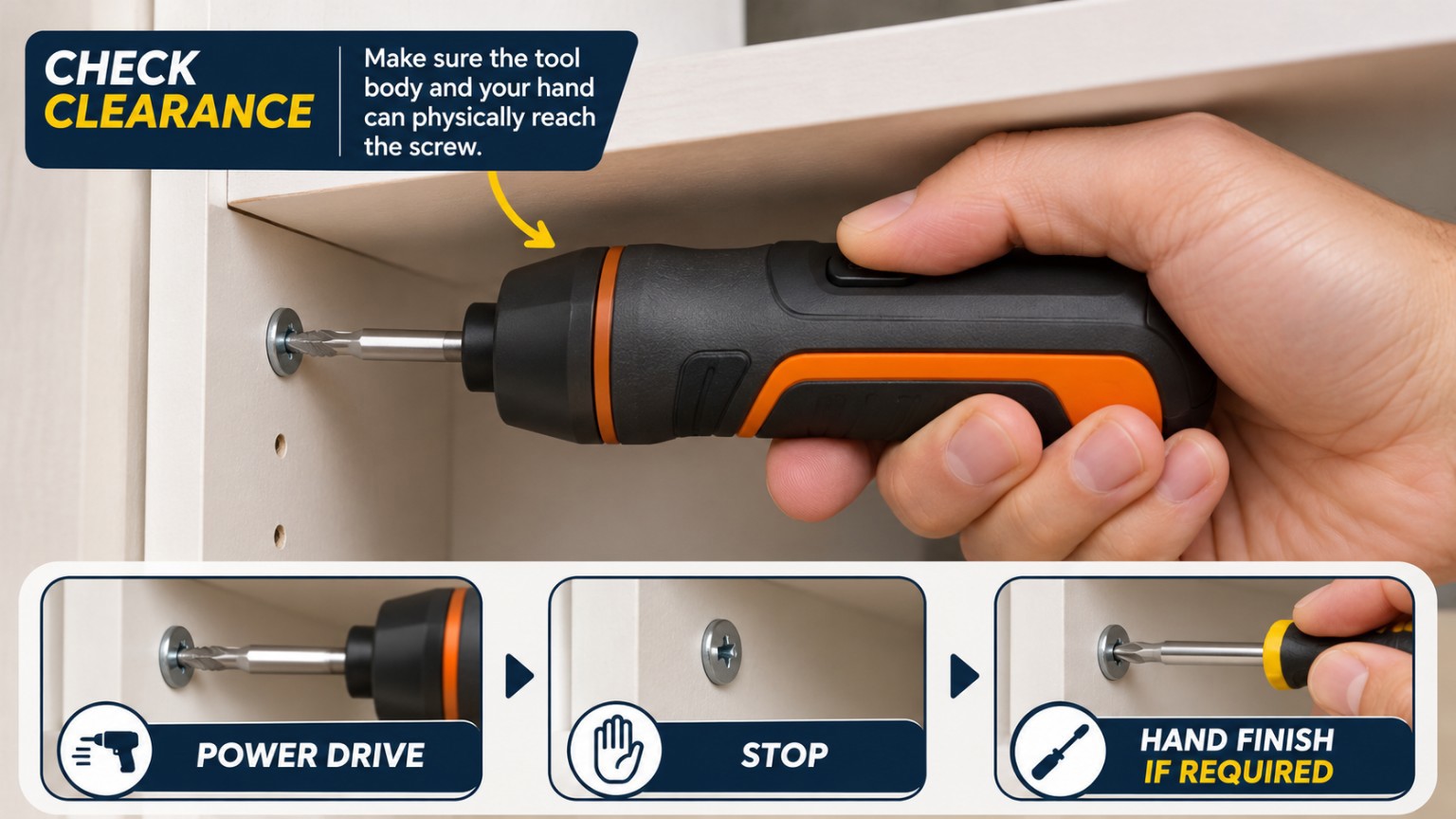
For either tool, the furniture instructions remain the controlling reference. If the instructions require final hand-tightening, stop power driving before the final tightening step and finish by hand.
5. Speed affects workflow, not just performance
SKIL publishes 240 RPM for the SD5619-01. WORX publishes 230 RPM for the WX255L.
A higher or lower no-load speed does not by itself tell you which tool is better for furniture assembly. What matters is whether the user can keep the bit seated, approach the fastener squarely, and stop at the correct point in the assembly sequence.
When working with flat-pack furniture, use power driving as a controlled step rather than a race. If alignment starts to change or resistance rises unexpectedly, stop and check the joint instead of forcing the fastener.
6. Bit access and reload workflow matter during a long assembly
The SKIL SD5619-01 uses a 1/4-inch hex chuck and includes PH2 and SL6 bits in the locked brief. The WORX WX255L uses a 1/4-inch hex reload cartridge and includes a screw-holder workflow.
These systems solve different handling problems. A conventional hex chuck makes it straightforward to use compatible bits, while a reload cartridge can reduce loose-bit handling during repeated tasks. Neither system is universally better.
Before buying, check the furniture hardware list. Confirm the screw-head types you will actually encounter and whether the included or planned bits match them. Do not assume one included bit set covers every furniture kit.
7. Charging workflow matters if the tool lives in a small rental
Charging can affect where the tool is stored between projects.
The SKIL SD5619-01 uses USB-C charging and has an approximate published charge time of three hours. Its battery is integrated lithium with a locked capacity of 0.8Ah / 3.2Wh.
The WORX WX255L uses a dedicated charger and has an approximate published charge time of five hours. Its battery capacity is 1.5Ah. USB charging is not established in the locked brief and should not be claimed.
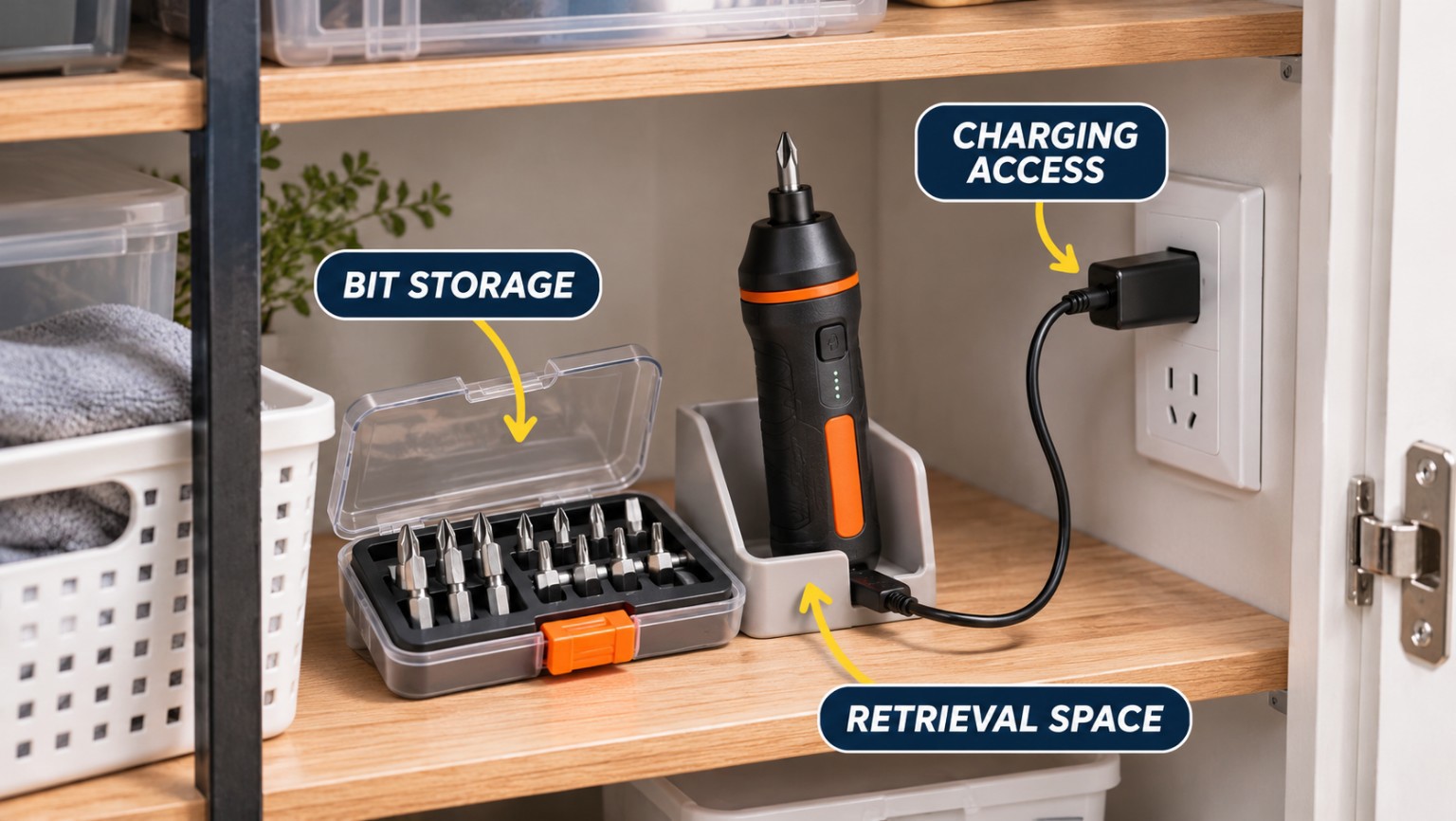
Ask where the screwdriver will live when it is not being used. A USB-C workflow may fit one charging setup; a dedicated charger may fit another. The correct choice depends on the user’s actual storage and charging routine, not on a universal convenience claim.
8. Compare the two locked products by verification task
SKIL SD5619-01
Identity:
- Brand: SKIL
- Model: SD5619-01
- UPC: 195532200773
- Do not confuse with SD5619-02.
Power and battery:
- 4V
- Integrated lithium battery
- 0.8Ah / 3.2Wh
Charging:
- USB-C
- Approximate charge time: 3 hours
Drive system:
- Torque range: 3.5–22 in-lb
- Torque settings: 3
- Speed: 240 RPM
- Chuck: 1/4-inch hex
- Included bits in locked brief: PH2 + SL6
- Direction: forward/reverse
Body and access:
- Pivot positions: 0 / 22.5 / 45 degrees
- Size: 7.3 × 1.5 × 2 inches
- Weight: 0.8 lb, maker-stated
- LED: yes
Verify before buying:
- whether the body and pivot positions clear the furniture’s tightest screw location;
- whether the included bits match the actual hardware;
- whether the user’s assembly instructions allow power driving at the intended steps;
- where final hand-tightening is required.
WORX WX255L
Identity:
- Brand: WORX
- Model: WX255L
- UPC: 845534012460
- Do not confuse with WX255L.2.
Power and battery:
- 4V Max / 3.6V nominal
- 1.5Ah battery
Charging:
- Dedicated charger
- Approximate charge time: 5 hours
- USB charging: not established
Drive system:
- Torque: 27 in-lb
- Adjustable clutch: not documented
- Speed: 230 RPM
- Chuck: 1/4-inch hex / reload cartridge
- Screw holder: yes
- Direction: forward/reverse
Body and access:
- Size: 6.5 H × 1.8 W × 6 D inches, retail-stated
- Weight: 1.1 lb, maker-stated
- LED: yes
Verify before buying:
- whether the reload cartridge and screw-holder workflow suit the hardware in the furniture kit;
- whether the body clears inside corners and panel edges;
- whether a dedicated charging location is practical;
- whether the assembly instructions allow power driving for the intended fasteners.
Neither product wins by default. The useful comparison is which tool body, control layout, bit workflow, torque approach, and charging routine can be verified against the furniture you actually assemble.
9. Build the assembly sequence before you start driving screws
A compact cordless screwdriver should fit into the furniture-maker’s sequence rather than replace it.
A practical sequence is:
- Read the full assembly instructions before starting.
- Separate hardware by type and confirm the required bits or hand tools.
- Identify steps where panels must remain loose for alignment.
- Identify steps where a power screwdriver is permitted.
- Drive only to the point allowed by the instructions.
- Stop if the screw begins to cross-thread, bind unexpectedly, or pull a panel out of alignment.
- Complete any required final hand-tightening by hand.
- Complete all anti-tip, anchoring, wall-fixing, or safety steps exactly as the furniture maker specifies.
Power-tool convenience does not cancel anti-tip requirements or other safety hardware.
10. Fit-first checklist before ordering
- FURNITURE INSTRUCTIONS: Confirm whether a power tool is permitted and where hand-tightening is required.
- SCREW LOCATION: Identify the tightest recessed, corner, or edge fastener.
- TOOL BODY: Compare real body dimensions with the available working space.
- GRIP: Make sure your hand can reach and control the tool without hitting adjacent panels.
- BIT ACCESS: Confirm the bit type and enough straight-line access to seat the bit correctly.
- CORNER ACCESS: Check whether the tool body can stay aligned in inside corners.
- TORQUE: Treat published torque and settings as tool specifications, not as guarantees against damage.
- SPEED: Use speed as part of a controlled workflow, not as a reason to force a fastener.
- CHARGING: Plan where the tool and charger will live between projects.
- BIT STORAGE / RELOAD: Check whether loose bits, a chuck, or a reload cartridge better fits your routine.
- ASSEMBLY SEQUENCE: Keep alignment steps, partial tightening, and final tightening in the order required by the manufacturer.
- FINAL HAND-TIGHTENING: Preserve any hand-tightening requirement.
- ANTI-TIP: Complete all required anchoring and anti-tip steps.
11. A simple fit test before buying
Use the furniture instructions or a similar project to identify the hardest screw location. Estimate the available body clearance around that screw, including the space your hand needs to hold the tool. Check the bit type, the approach angle, and the next panel that will be installed.
Then map the workflow after assembly: where the screwdriver will be stored, where it will charge, and where the bits or cartridge will be kept.
If a critical specification or compatibility point is unavailable, verify it instead of guessing.
Bottom line
Compact cordless screwdrivers can reduce repetitive manual turning during appropriate furniture-assembly steps, but the useful tool is the one that fits the screw location, the user’s grip, the required bit, the charging routine, and the furniture maker’s assembly sequence.
The SKIL SD5619-01 and WORX WX255L represent different approaches: SKIL combines USB-C charging, three torque settings, and a pivoting body, while WORX combines a reload cartridge, screw holder, and dedicated charging workflow. Those differences are useful only when matched to the furniture and the user’s actual workflow.
Do not treat published torque as damage prevention. Do not assume a power tool is suitable for every fastener. Preserve final hand-tightening and anti-tip requirements exactly as the furniture manufacturer specifies.